What to Do When a Room Feels Flat (And You Don’t Want to Add More Color)
You’ve picked the furniture. The color palette works. Everything technically goes together.
So why does the room still feel a little… flat?
The instinct is often to add something else—a colorful pillow, another piece of art, one more decorative object. But when a room feels unfinished, more color usually isn’t what’s missing.
What it may actually need is dimension.
Contrast, texture, pattern, interesting shapes, varied materials, layered lighting, and vertical interest give your eye more to explore. And the best part? You can add all of them without changing the color palette you already love!
Before you buy another throw pillow, try one of the steps below!
1. Add More Contrast
Take a look around the room and squint your eyes slightly.
Does everything blend together?
A room filled with similar tones and visual weights can feel flat even when every individual piece is beautiful. Contrast gives the eye somewhere to land.
And you don't need a dramatic black accent wall to get it.
Try introducing a few small, darker elements into a lighter room or something light and sculptural against a dark backdrop. Picture frames, lamps, candleholders, hardware, and decorative objects are all easy ways to create those visual punctuation marks.
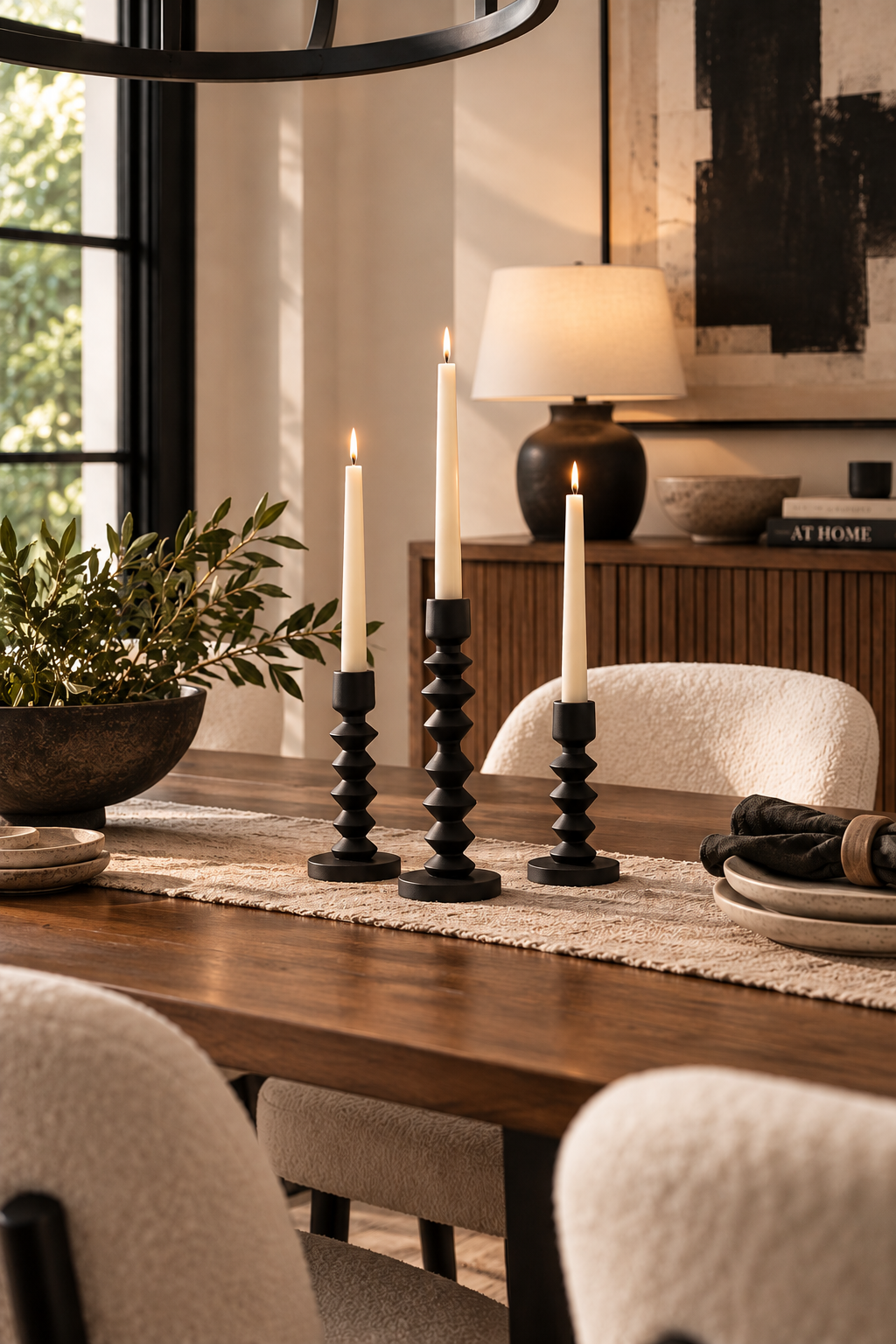
🌿 Potted + Styled Pick: Black Modern Taper Candle Holders
This set of 3 black modern candleholders is a PERFECT example of introducing a spot of contrast to a space. A small amount of matte black can provide just enough definition on a console, mantel, or dining table without changing the overall palette of the room.
The principle: Don't add another color just because a room feels boring. First ask whether it simply needs more contrast!
2. Layer Your Textures
A neutral room isn't boring. A room where everything has the same texture might be.
Imagine a cream sofa, cream pillows, cream rug, and cream throw. The colors can be nearly identical and the room can still feel incredibly layered if one is linen, another boucle, another wool, and another softly crinkled cotton.
Texture creates subtle highlights and shadows. That variation becomes especially important when you're working with a restrained color palette.
Look for opportunities to combine:
Smooth + nubby. Soft + hard. Woven + polished. Matte + reflective.
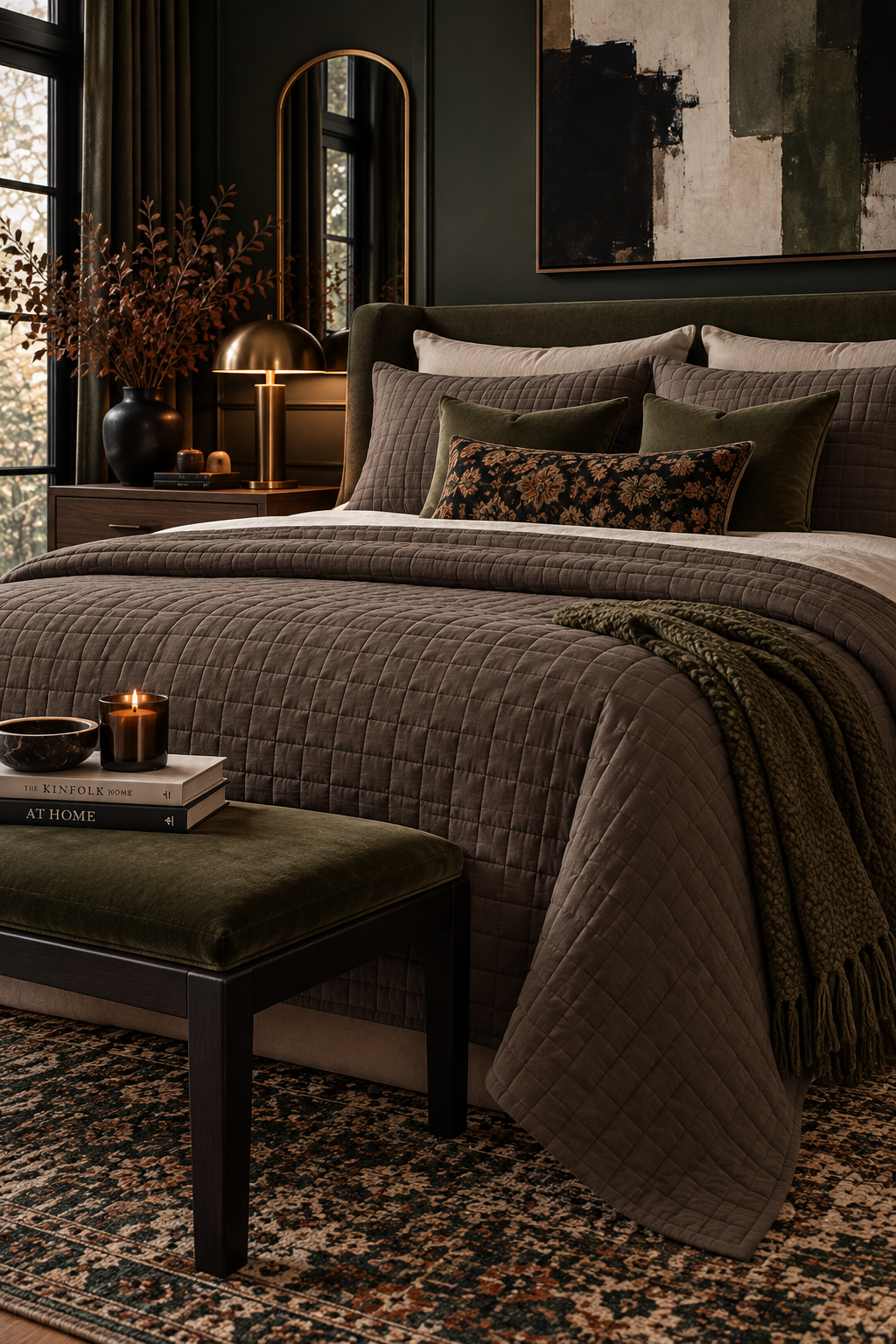
🌿 Potted + Styled Pick: Cotton Gauze Coverlet/Quilt Set
The softly crinkled texture of this gauze coverlet/sham set is exactly why a piece like this works so well in a neutral bedroom. You don't need another color competing with the room—the fabric itself creates interest.
You can use the same principle with a chunky throw, linen curtains, boucle chair, woven basket, or textured pillow.
The principle: When the colors are quiet, let the materials do more of the talking.
3. Break Up All Those Straight Lines
Here's something that's surprisingly easy to overlook: Most rooms are full of rectangles.
Sofas. Area rugs. Windows. Coffee tables. Consoles. Artwork. TVs. Cabinets.
Rectangle. Rectangle. Rectangle. 😂
Introducing even one unexpected silhouette can completely change how a room feels.
Look for curved furniture, irregular mirrors, round lamps, sculptural accessories, arched details, or furniture with interesting negative space.
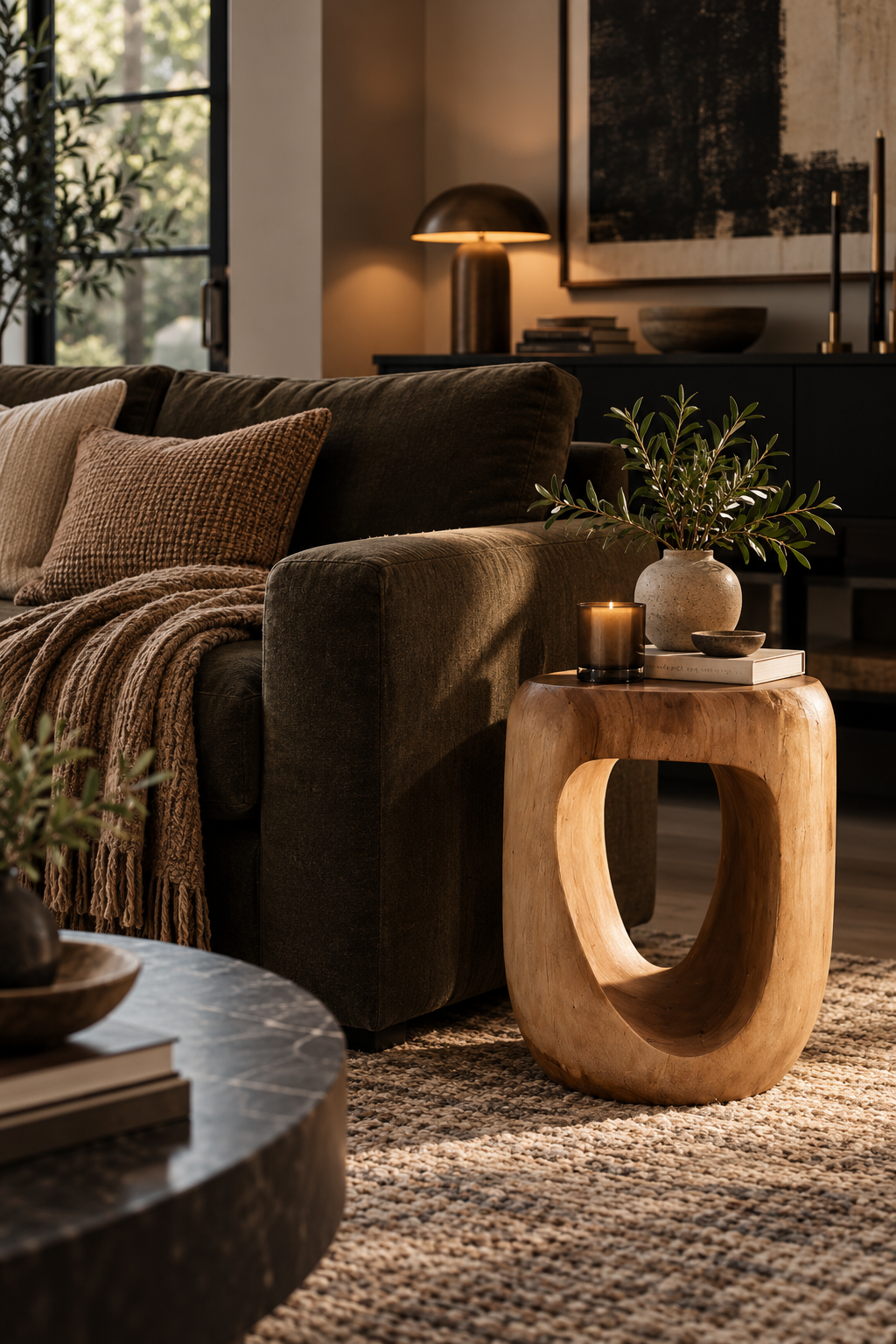
🌿 Potted + Styled Pick: Sculptural Wood Side Table
This sculptural, natural wood side table is a great example because it accomplishes several things at once.
Its rounded silhouette interrupts all those straight lines, the large opening creates interesting negative space, and the natural wood introduces warmth and texture.
It's functional, but the shape is what makes the room more interesting.
The principle: If your furniture feels like a collection of boxes, don't add more décor. Try a different shape!
4. Mix Your Materials
Sometimes a room doesn't need another object.
It needs another material.
If most of the room consists of upholstered furniture and painted surfaces, adding natural wood, stone, metal, glass, ceramic, or woven fibers can immediately make it feel more collected.
You don't need every material in every room, either. Two or three thoughtful contrasts can be plenty.
A wooden console topped with a stone tray and a glass lamp already gives the eye three very different surfaces to explore—even if they're all within the same neutral palette.
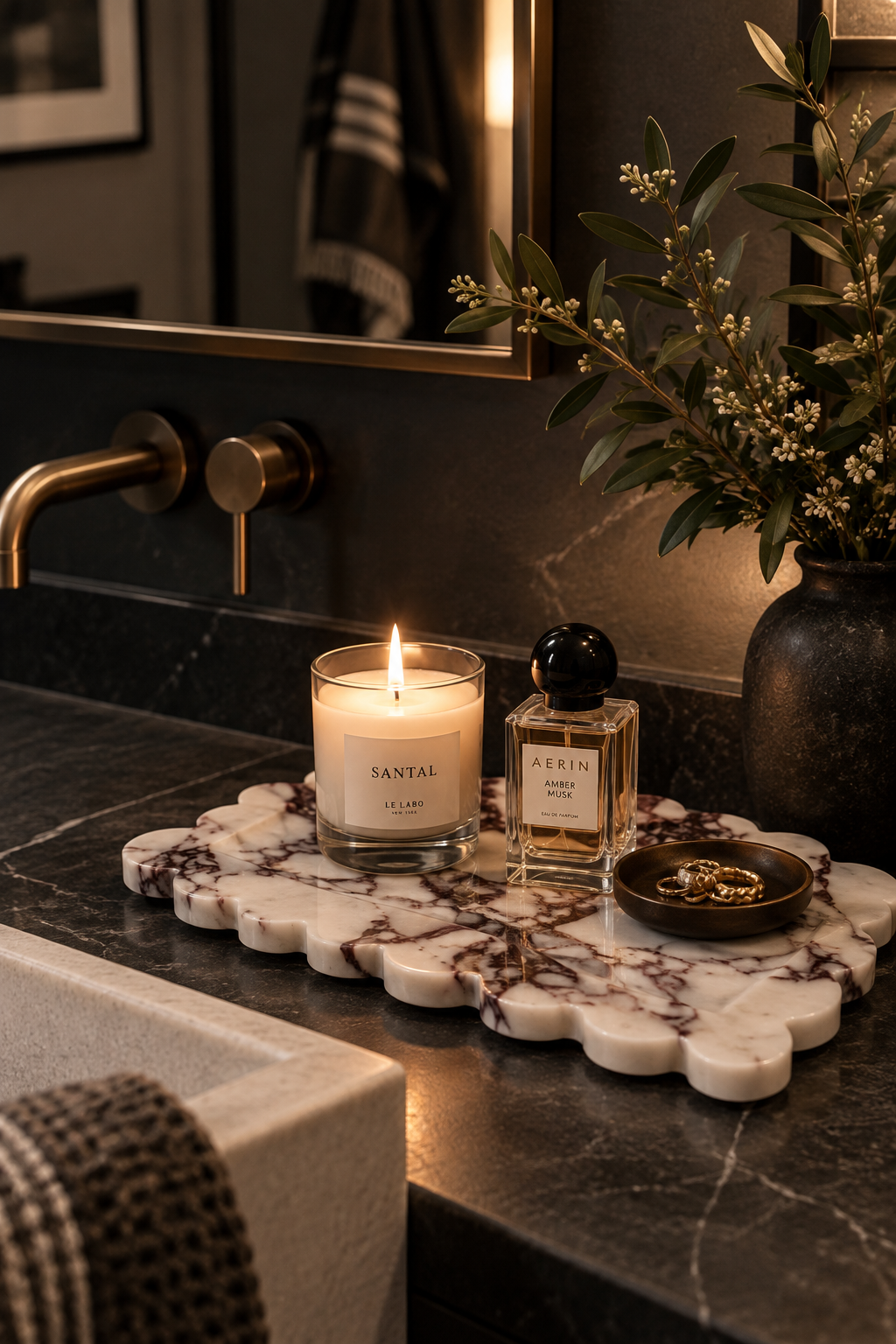
🌿 Potted + Styled Pick: Natural Marble Scalloped Tray
This scalloped natural marble tray is a great example of why small accessories can have an outsized effect.
The stone introduces natural variation while the scalloped edge brings in shape. Styled on a bathroom vanity, dresser, or console, it adds dimension without introducing another competing color.
And because natural materials have subtle variations of their own, they can keep a neutral space from feeling overly perfect or one-note.
The principle: Instead of asking “What color does this room need?” try asking “What material is missing?”
5. Add Pattern—Not Another Color
Pattern and color aren't the same thing.
And that distinction is incredibly useful when you love your existing palette but the room still needs more energy.
A black-and-cream floral rug can add enormous visual movement to a black-and-cream room. A striped pillow can make a beige sofa more interesting without introducing a single new hue.
Pattern gives the eye something to follow.
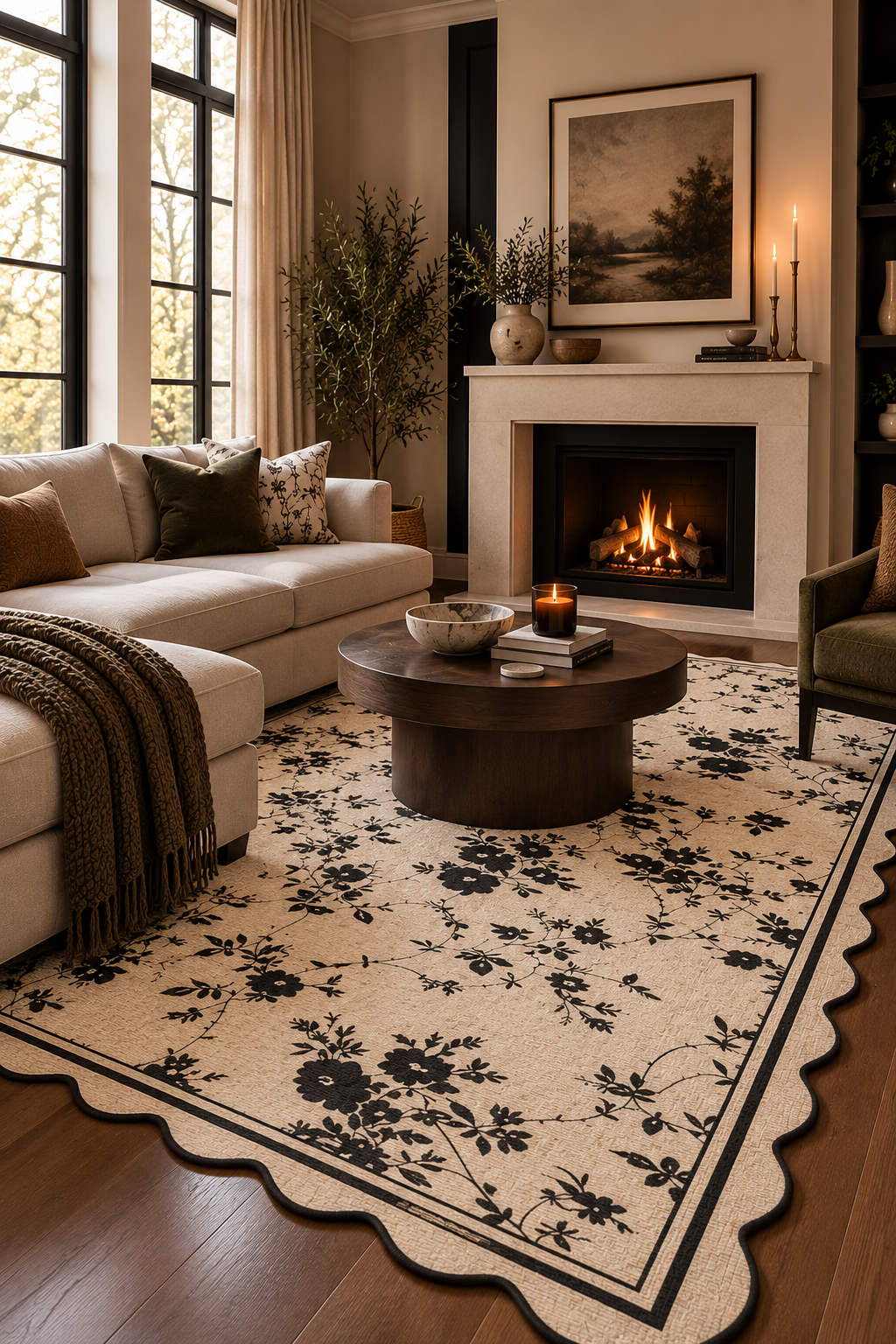
🌿 Potted + Styled Pick: Scalloped Floral Rug
This black-and-cream scalloped rug is basically this principle in product form.
The floral pattern adds movement while staying within a restrained neutral palette. Even better, the scalloped border interrupts the straight lines around the perimeter of the room.
So we're getting pattern + shape + contrast without relying on more color.
That's a lot of design work from one piece.
The principle: If you like your palette but the room still feels boring, add movement before adding color.
6. Turn Off the Big Light
Yes. We're talking about this again. 😂
Because sometimes your decorating isn't the problem at all.
Your lighting is.
One bright overhead fixture tends to illuminate everything at roughly the same intensity. The room becomes visually uniform—which can make even beautifully styled spaces feel surprisingly flat.
Multiple light sources create something much more interesting: highlights, shadows, pools of warmth, and depth.
Try combining a floor lamp with a small table lamp. Add a lamp to a kitchen counter. Use sconces beside artwork. Let some corners remain softer and moodier than others.
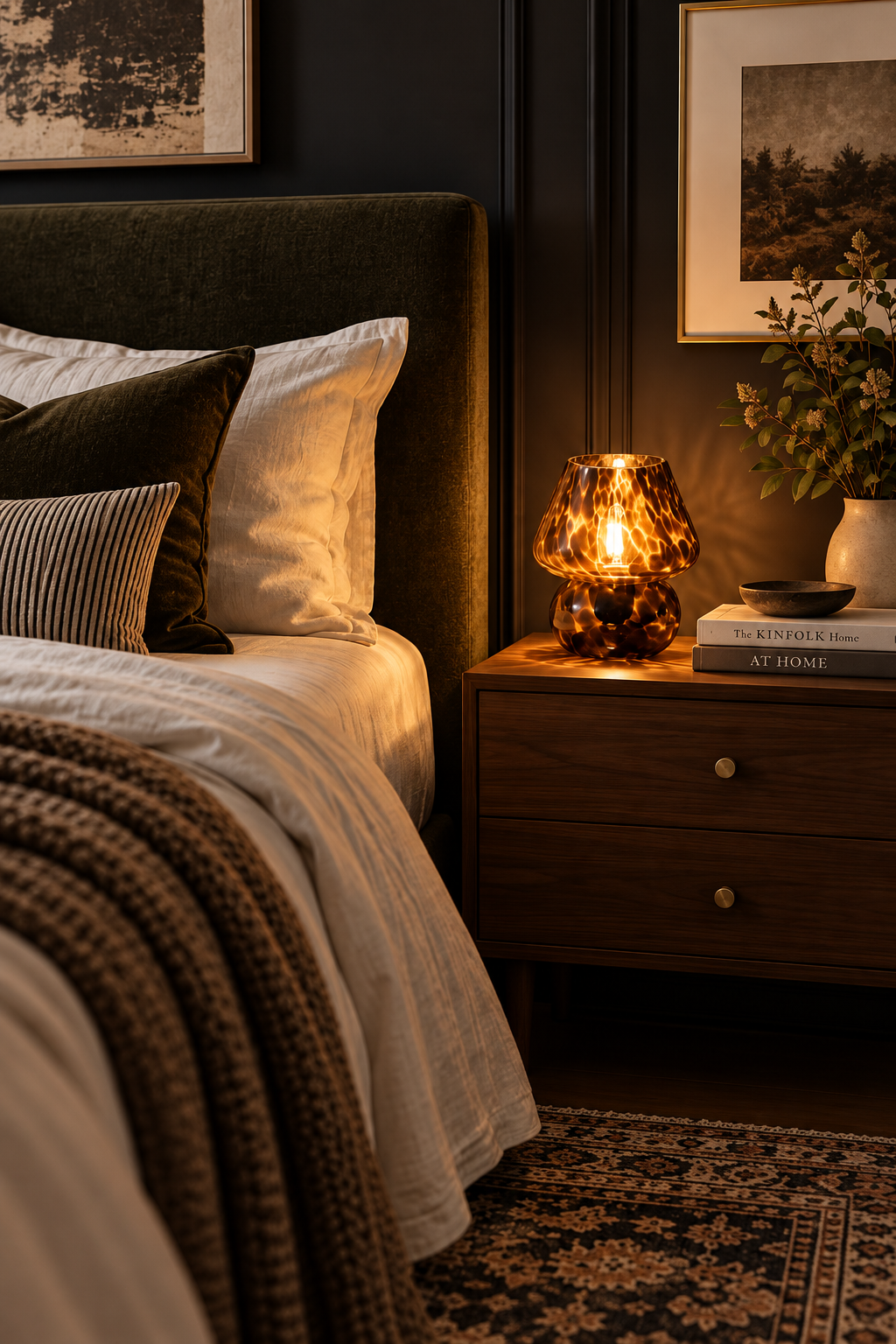
🌿 Potted + Styled Pick: Mushroom Table Lamp
Our little mushroom table lamp is exactly the kind of accent lighting that can transform a corner without becoming the center of attention.
And because its sculptural silhouette is interesting even when the lamp is turned off, it does double duty as both lighting and décor.
The principle: Don't just decorate the room. Light it in layers.
Continue reading: Turn Off the Big Light: How to Layer Lighting for a Cozy Home
7. Create Vertical Interest
Now look at where everything in the room lives.
If your sofa, chairs, coffee table, side tables, lamps, and accessories all occupy roughly the lower half of the room, the space can feel visually bottom-heavy.
That's where vertical interest comes in.
Use artwork, mirrors, tall floor lamps, curtains, wall-mounted objects, branches, or sculptural wall pieces to draw the eye upward.
The goal isn't to fill every blank wall.
It's to give your eye a reason to move around the entire room instead of stopping at furniture level.
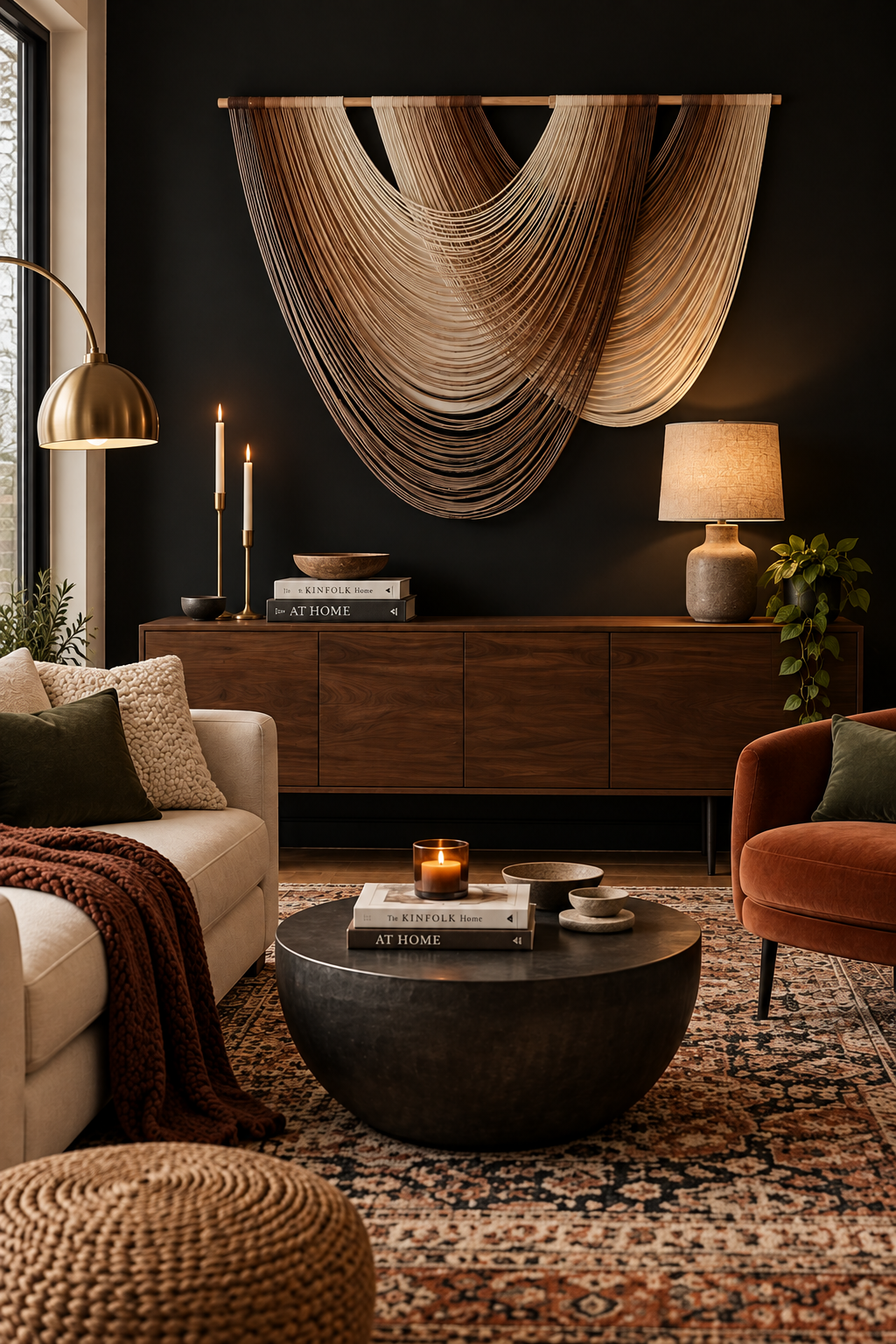
🌿 Potted + Styled Pick: Textured Fiber Wall Art
A piece of fiber or textile wall art is particularly useful here because it solves two problems at once.
It brings visual attention upward while adding a completely different texture from the hard surfaces and framed artwork commonly found elsewhere in a room.
That combination makes the room feel layered without requiring another color—or another tabletop accessory.
The principle: When a room feels unfinished, sometimes the missing piece isn't on the table. Look up.
Before You Buy Anything Else…
The next time a room feels flat, resist the urge to immediately shop for more décor.
Stand in the doorway and diagnose it first.
Ask yourself:
Does the room need more contrast?
Are there enough different textures?
Is everything the same basic shape?
Could I introduce another material?
Would pattern create more movement?
Is the lighting too uniform?
Does the room have enough vertical interest?
You may discover that you don't need to add much at all!
Sometimes one sculptural table, patterned rug, small lamp, textured textile, or darker accent is enough to make everything already in the room suddenly make sense.
🌿 Signature Takeaway
When a room feels flat, don't automatically add more color… Or more stuff. Add dimension.
Contrast gives the eye somewhere to land. Texture gives it something to explore. Pattern creates movement. Shape breaks repetition. Mixed materials create depth. Layered lighting creates atmosphere. Vertical interest draws the eye through the entire space.
Beautiful homes don't happen by accident. 🌿
They happen when the individual pieces work together to create contrast, rhythm, depth, and interest.
🌿 Continue Your Styling Journey
If you're working through a room that still doesn't quite feel finished, keep going with:
How to Use Black Decor Without Making a Room Feel Dark
Learn how small doses of black can add contrast and definition without weighing down a room.
Turn Off the Big Light: How to Layer Lighting for a Cozy Home
Create warmth and dimension with multiple light sources instead of relying on overhead lighting.
Best Decorative Trays for Every Room
See how trays can add material, shape, organization, and an intentional finishing layer throughout your home.
How to Style a Warm + Welcoming Entryway Without Spending a Fortune
Put these same styling principles to work in one of the hardest-working spaces in your home.
