Turn Off the Big Light: How to Layer Lighting for a Cozy Home
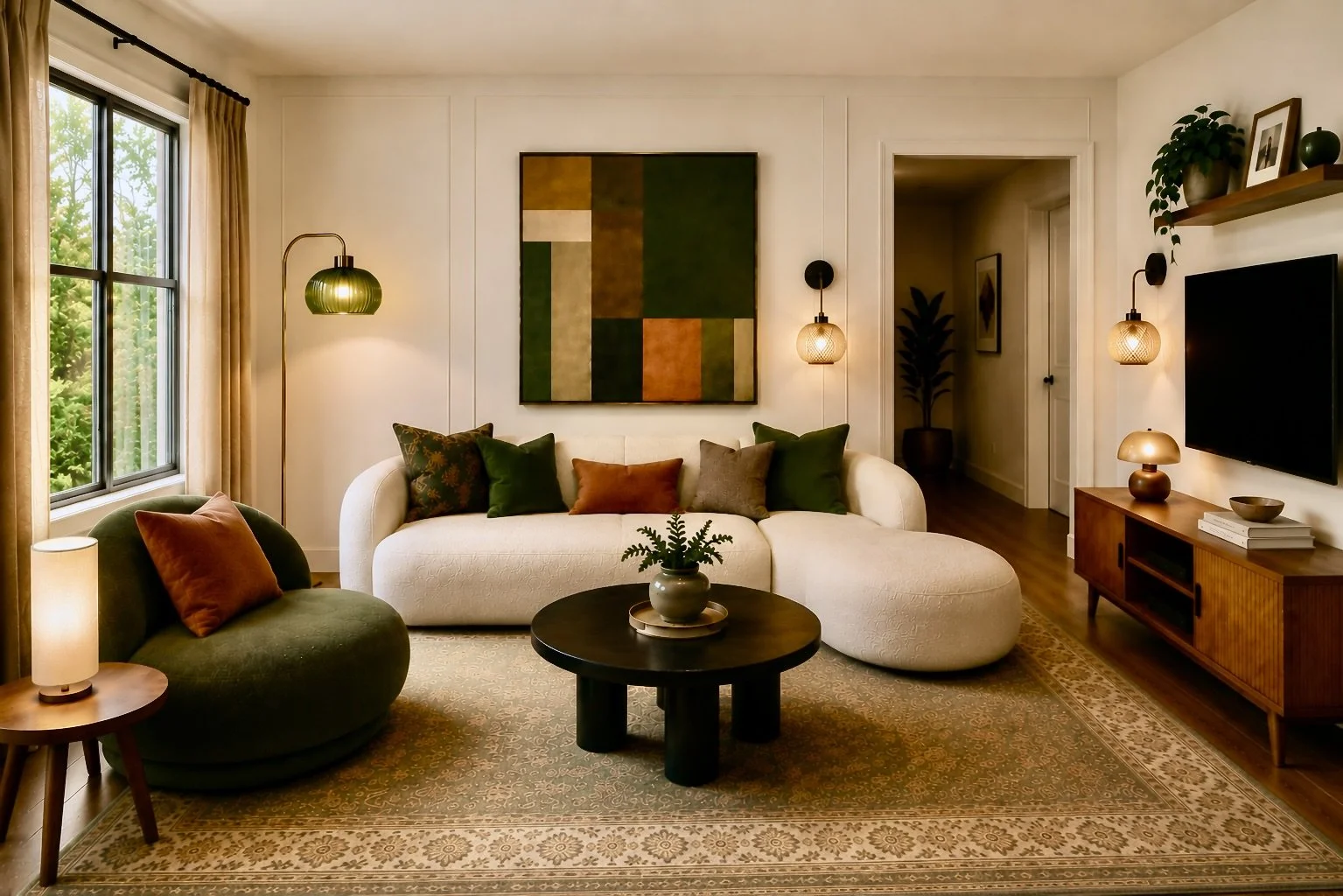
There is a very specific moment in the evening when the overhead light simply has to go. You know the one.
Dinner is over. The laptop is closed. You're ready for the house to feel warm and cozy and instead, one ceiling fixture is illuminating every square inch of your living room with the enthusiasm of a dentist's office.
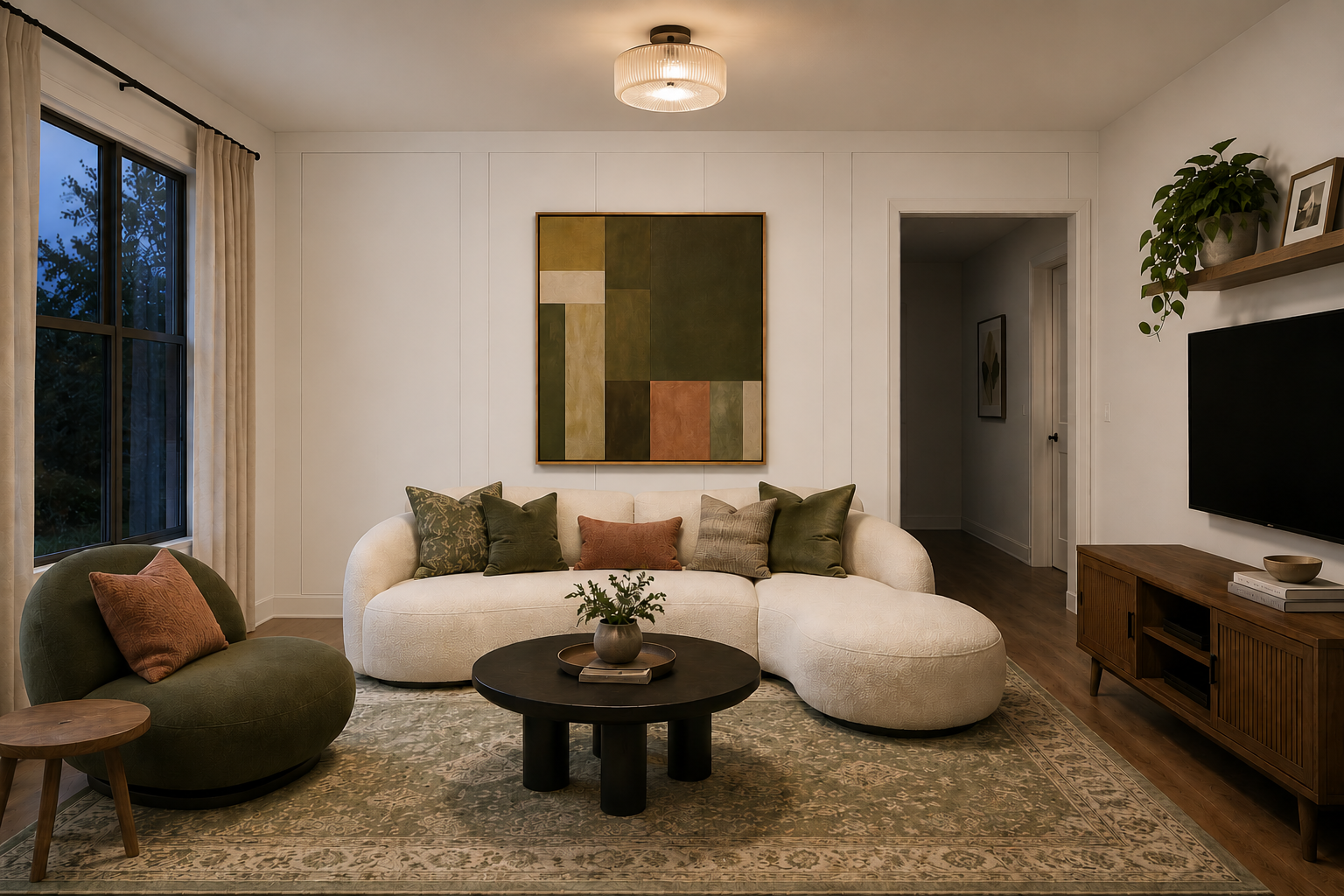
The problem isn't necessarily your room. It might just be your lighting.
One of the easiest ways to make a living room feel warmer, more inviting, and more intentionally designed is to stop asking one overhead fixture to do all the work.
The secret is layered lighting: using several light sources at different heights and in different areas of the room to create smaller pools of warm light. And no, this does not mean buying twelve lamps and turning your living room into a lighting showroom.
We're going to use four strategic layers.
Why Layered Lighting Makes a Room Feel Better
Before we start shopping, here's the important part: good lighting isn't simply about making a room brighter. It's about deciding where the light comes from, what it illuminates, and how it makes the room feel.
An overhead fixture casts light broadly from one high point. That's useful when you're cleaning, looking for the remote, or trying to determine what your dog just ate off the floor.
But for everyday living? We want something softer.
By placing light sources at different heights around the room, you create pockets of illumination that draw your eye through the space. Corners feel less forgotten. Furniture feels more dimensional. Textures become more noticeable. And suddenly the exact same room feels considerably cozier.
Potted + Styled Rule: Don't just light the room. Light the places you actually use.
Layer 1: Start with Ambient Light
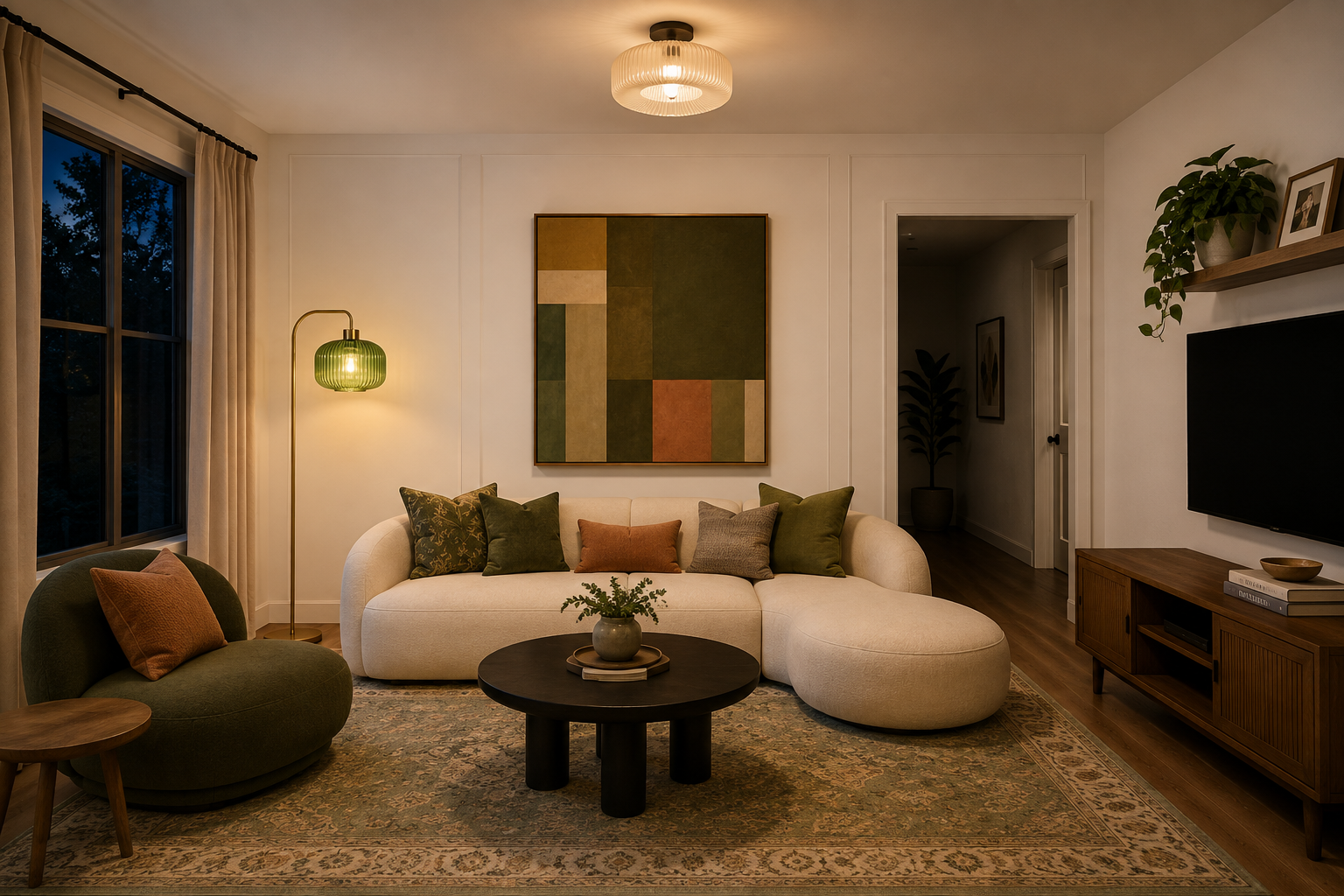
Our first addition is a floor lamp.
A floor lamp is one of the easiest ways to introduce a second source of ambient light because it gets illumination away from the ceiling and closer to where you're actually living.
For this room, I chose a green, ribbed-glass floor lamp with warm brass detailing. And there's a reason I didn't choose another neutral lamp.
Lighting fixtures are part of your décor. The green glass reinforces the olive tones already happening in the room, while the ribbed texture gives the fixture some personality even when it isn't turned on. Once illuminated, the glass produces a softer glow than an exposed bulb would.
We placed it behind the sofa near the reading chair, where it can brighten an otherwise darker corner without flooding the entire room.
Even better: it's dimmable. That's going to become important.
Styling takeaway: Your floor lamp doesn't need to match your furniture. Look for a material, color, or finish that already appears somewhere else in the room and let the lamp quietly repeat it.
Layer 2: Add Light Where You Actually Need It
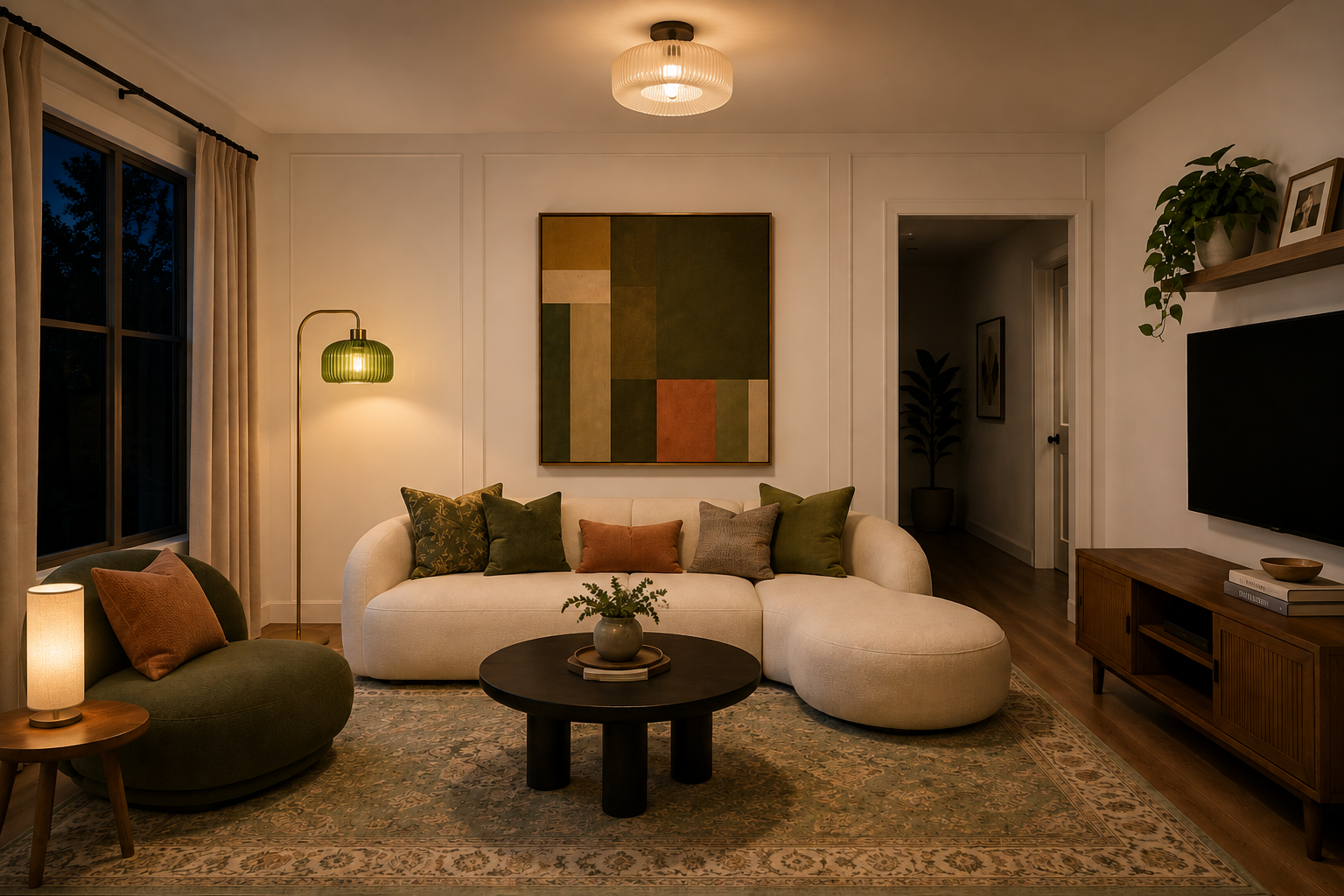
Next up: the little table beside the accent chair.
This is where layered lighting starts becoming functional, not merely atmospheric.
Instead of choosing another large statement lamp, we used a narrow, cylindrical table lamp with a tiny footprint.
It's tall enough to provide useful localized light near the chair, but slim enough that it doesn't completely commandeer the side table.
This is particularly useful in smaller rooms where every surface is already fighting for its life.
A reading chair doesn't necessarily need enough light to illuminate the entire corner. It needs enough light where the person sitting in the chair actually needs it. That distinction matters.
The Small-Surface Rule
If you have a tiny nightstand, drink table, desk, console or shelf, don't assume you don't have room for a lamp.
Instead, look for:
a narrow base
a tall shade
a small overall footprint
dimmable brightness
warm light
Our little cylinder lamp checks those boxes without visually competing with the green floor lamp.
Styling takeaway: Layered lighting works best when your fixtures aren't all the same size, shape, or material. Coordinate them. Don't clone them.
Layer 3: Create a Little Pool of Glow
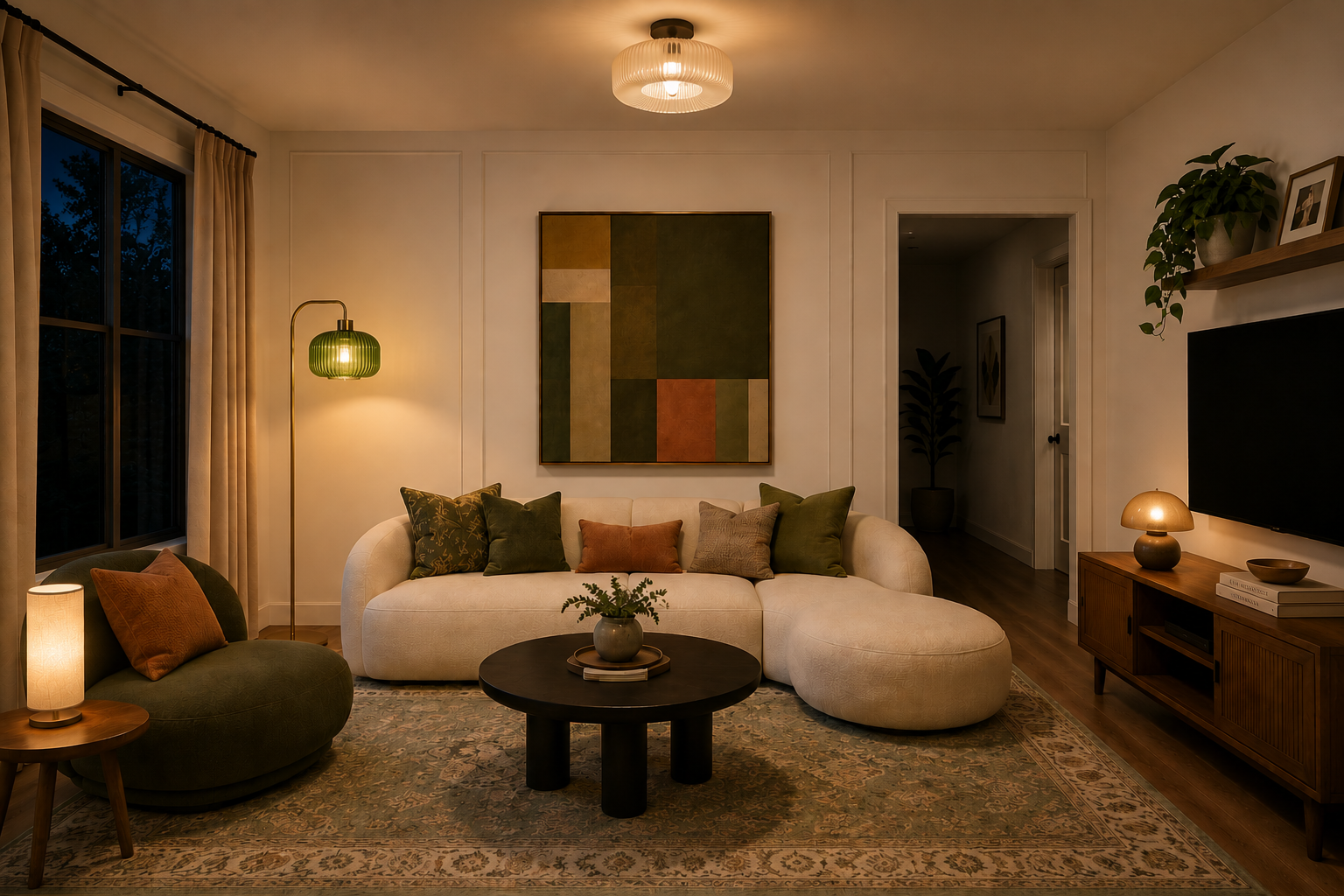
And now we welcome...
Mushroom Man. 🍄
This small, mushroom-shaped lamp on the media console is doing almost no heavy lifting from a practical illumination standpoint.
And that's precisely why I love it.
Not every lamp needs a job description that includes LIGHT ENTIRE ROOM. Accent lighting can exist simply to create atmosphere.
A small lamp on a console, bookshelf, kitchen counter, bar cabinet or dresser creates a concentrated pool of warm light that makes that particular area feel intentional.
Our mushroom lamp also gives us something the other fixtures don't: a low, sculptural light source.
At this point we have:
a tall glass floor lamp,
a narrow fabric table lamp,
and a small rounded accent lamp.
Different heights. Different shapes. Different materials.
But all producing warm light.
That's how lighting begins to feel collected instead of purchased as a matching set.
Layer 4: Bring Some Light Up the Walls
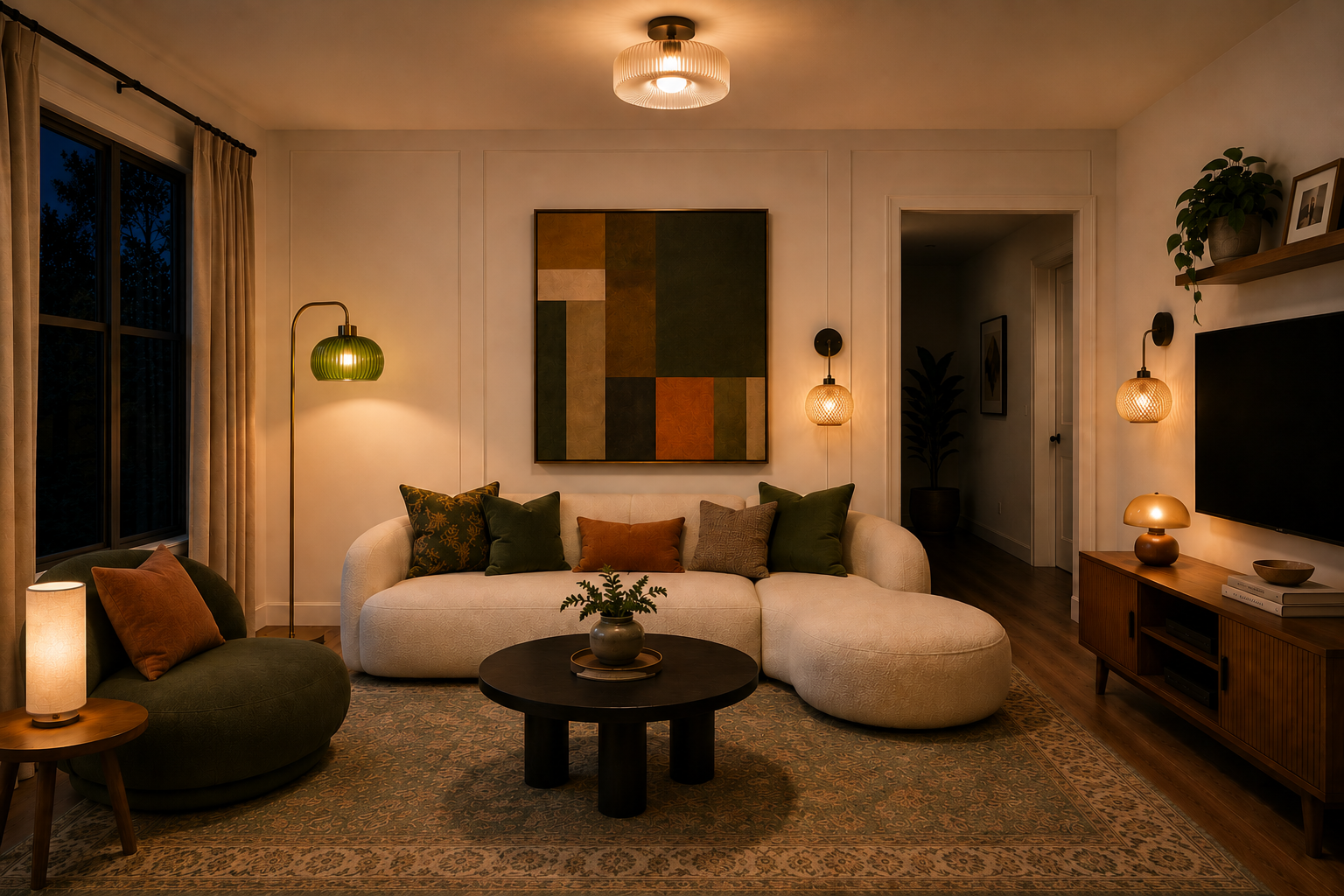
And now… Lighting that does not require a footprint on your hardwood floors or furniture surfaces.
Look around your room for a second.
Where are all your lamps?
If every light source is sitting on a floor or tabletop, you may be missing an entire layer: vertical lighting.
Wall sconces introduce light at eye level and help distribute illumination around the perimeter of a room.
But there is one obvious complication.
Hardwiring sconces usually involves electricity. And electricity usually involves someone considerably more qualified than me arriving with tools.
Fortunately, rechargeable and battery-operated wall sconces have become a very useful workaround.
For this room, we added two woven rattan sconces, one beside the artwork and another near the media console.
The natural texture keeps them from feeling overly formal, and placing them in separate areas of the room spreads light rather than creating one concentrated glowing wall.
Best of all, these don't require hardwiring.
That means renters, or anyone who simply doesn't feel like opening a wall for the sake of ambience, can still introduce vertical lighting.
One caveat: cordless lighting isn't magic. Rechargeable bulbs eventually need to be recharged. I think of these as flexible accent lighting rather than a permanent substitute for hardwired fixtures that run for hours every day.
Now Turn Off the Big Light
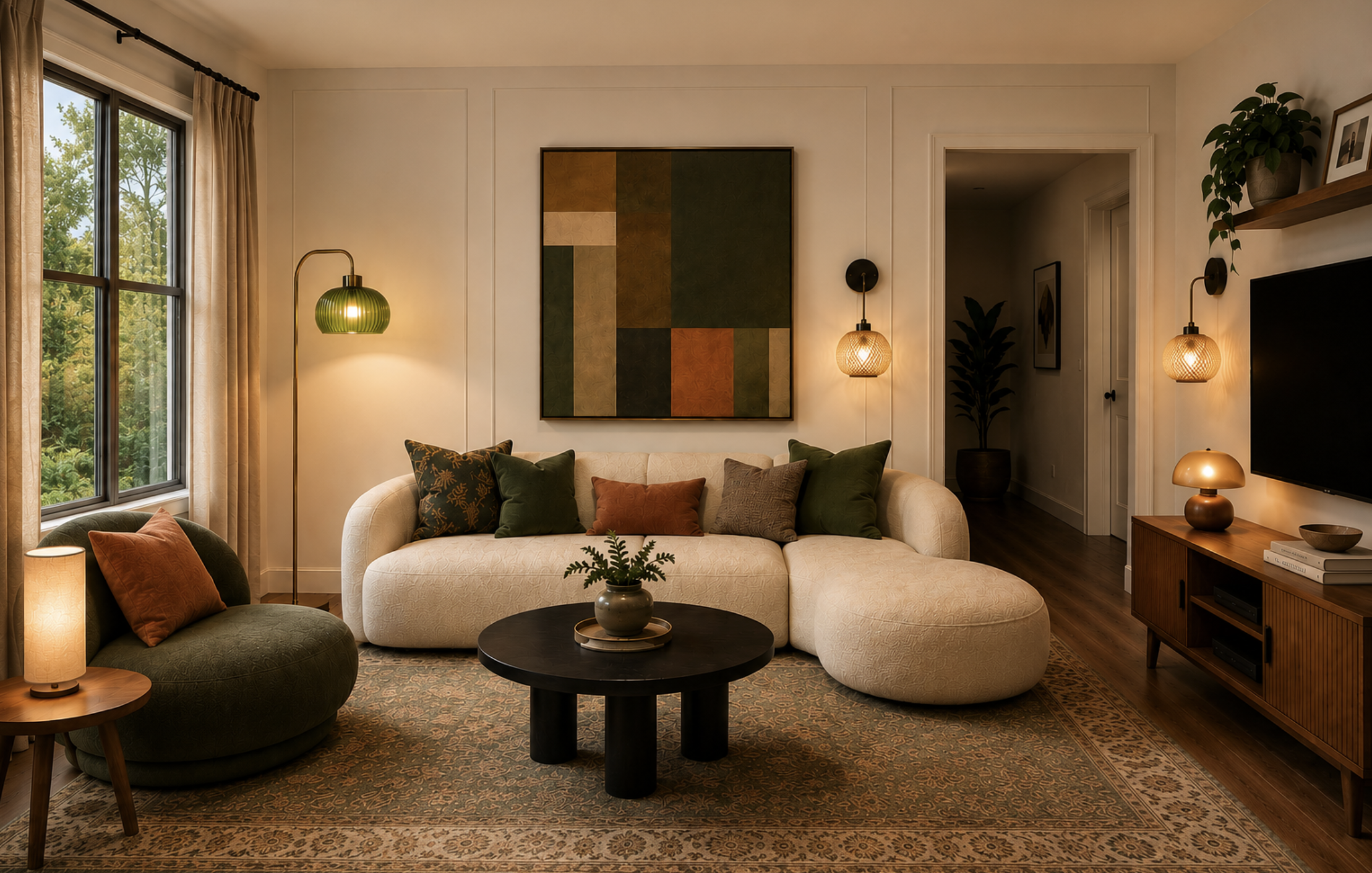
This is the part that makes everything click.
We haven't changed the sofa.
We haven't replaced the rug.
We haven't painted the walls.
We haven't restyled the room.
We simply distributed the light.
Now turn off the overhead fixture and suddenly the room feels completely different.
Instead of one source pouring light indiscriminately over everything, your eye moves from one warm area to another.
The floor lamp softly illuminates the seating area.
The table lamp makes the reading chair feel inviting.
The little mushroom lamp creates a glow near the media console.
The sconces pull warm light upward and across the walls.
The room isn't necessarily brighter.
It's better lit.
And that's the distinction.
The Secret Ingredient: Warm Light
You can choose the most beautiful lamps on earth and still accidentally create the ambiance of aisle seven at the grocery store if the bulbs are wrong.
For cozy living spaces, look for bulbs around 2700K–3000K.
Lower Kelvin temperatures produce warmer, more golden light. Higher temperatures become cooler and bluer.
For living rooms, bedrooms and other spaces where you want to relax, warm light generally creates the softer atmosphere we're after.
And whenever possible?
Dim it.
Several lower-intensity lights around a room will often feel considerably better than one extremely bright source.
Think: more sources, less intensity.
Not: every lamp at maximum power until the neighbors can see your throw pillows from space.
The Layered Lighting Formula
You don't need these exact four lamps—or even four lamps at all.
Instead, use the formula:
1. Ambient light
A floor lamp or another source that provides a broader pool of illumination.
2. Localized/task light
A table, desk or reading lamp placed near an activity.
3. Accent light
A smaller decorative lamp that creates atmosphere.
4. Vertical light
A sconce, picture light or other wall-mounted source that brings illumination higher into the room.
Then spread those sources around the room instead of clustering everything in one corner.
Vary their heights.
Mix their materials.
Keep their color temperatures warm.
And put them on dimmers whenever you can.
What If Your Room Is Small?
You do not need four lighting fixtures in every room.
Please do not email me from inside a 400-square-foot apartment surrounded by lamps. 😂 The principle scales.
In a smaller living room, you might use:
one floor lamp + one small table lamp + one cordless sconce.
In a bedroom:
two bedside lamps + one floor lamp.
In a reading nook:
one directional lamp + one small accent light nearby.
What matters is that you're not relying exclusively on one bright source overhead.
One More Thing: Your Lamps Should Complement Each Other, Not Match
This may be my favorite part. Look at the fixtures, specifically, that we used in this room!
Green ribbed glass.
Cream fabric.
Smoky sculptural glass.
Natural woven rattan.
They aren't a set.
But they share enough visual language—warm finishes, organic shapes, earthy colors—that they work together.
That's the goal.
Your lighting should feel like it was collected for the room over time, not purchased from a four-piece “Living Room Lamp Collection.”
Mix glass with fabric.
Pair metal with woven materials.
Repeat one or two finishes somewhere in the room.
Let one lamp be interesting and another be quiet.
Layer the lighting the same way you'd layer the décor.
🌿 The Potted + Styled Signature Takeaway
A cozy room isn't created by filling every corner with more stuff. Sometimes, you just need to change the way you see what is already there.
Start with one lamp.
Put another where you actually spend time.
Add a small glow somewhere unexpected.
Bring a little light onto the walls.
Then, when evening rolls around... turn off the big light.
Your furniture didn't suddenly get better.
Your décor didn't suddenly get more expensive.
You simply gave the room what it needed: layers.
Because beautiful homes don't happen by accident.
Sometimes they happen because someone finally turned off the ceiling light. 😂💡🌿
