How to Hide Everyday Clutter Without Sacrificing Your Style
Beautiful homes don’t happen by accident. 🌿
They also don’t happen because the people who live in them somehow stopped owning shoes, charging cords, extra blankets, toiletries, paperwork, dog leashes, and seventeen miscellaneous objects that apparently belong nowhere.
The difference between a room that feels calm and one that constantly feels a little chaotic often isn’t how much stuff is in it. It’s how much of that stuff you can see.
And that brings us to one of the least glamorous, but most transformative, parts of decorating a home:
STORAGE.
Because organization isn’t just about finding somewhere to put everything. The way you store things affects how a room looks and feels, too. The good news? You don’t have to choose between a beautiful home and one that actually functions.
You just need storage that knows how to behave.
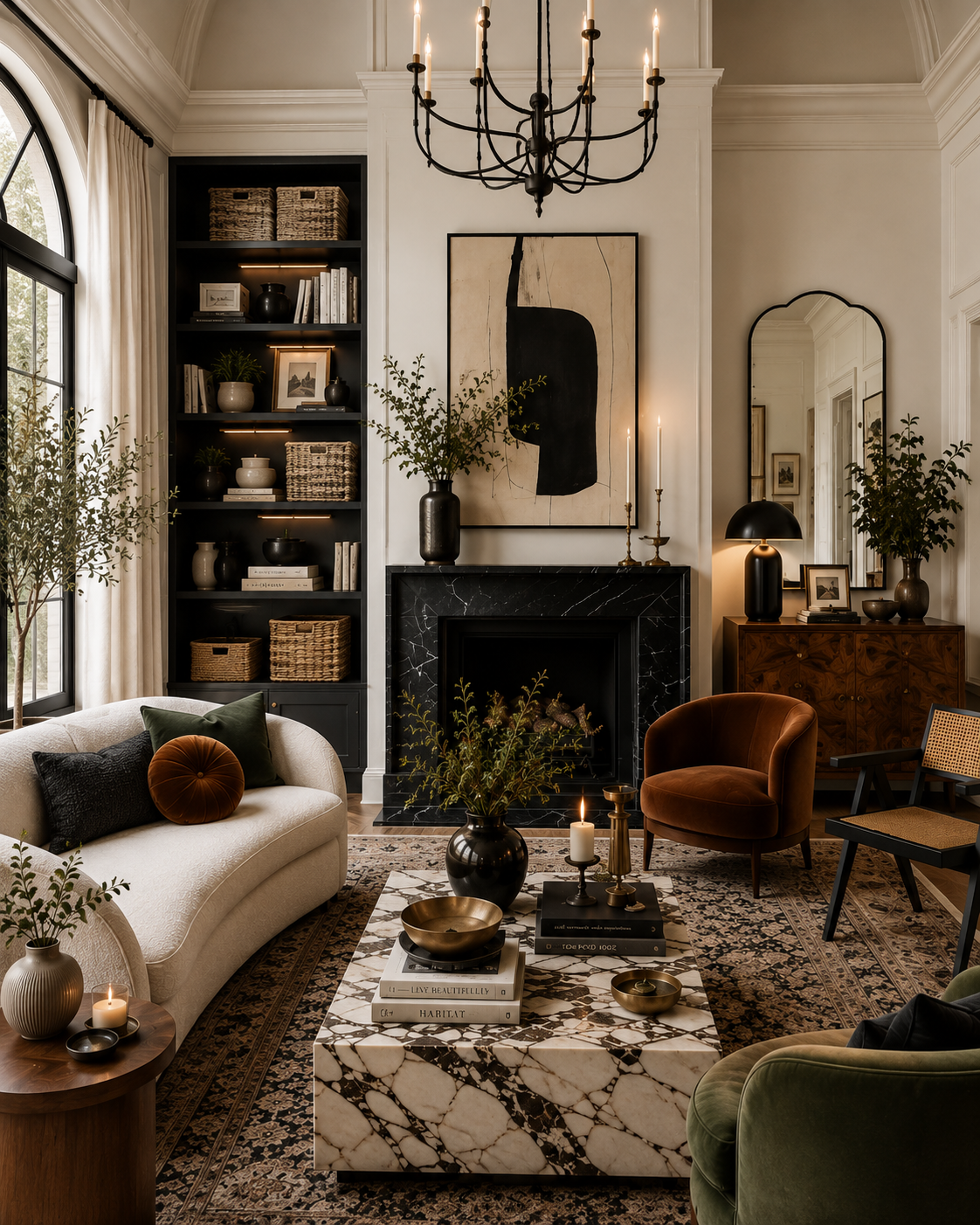
Can You Spot the Storage? 👀
At first glance, this just looks like a beautifully styled living room. But look a little closer. Woven baskets tuck extra candlesticks, coasters, and other “bring out when guests come over” items into the bookshelves, while the cabinet under the mirror keeps pieces like throw pillows and seasonal decor conveniently out of sight. That’s the goal of stylish storage: you notice the room, not all the places it’s hiding your stuff.
The best storage doesn’t announce itself with a label maker and a row of plastic bins. 😂 It quietly does its job while letting the rest of the room shine.
🌿 Today’s Lesson: Good Storage Should Solve the Clutter Problem,Without Creating a Decorating Problem
There’s a reason a room can technically be “organized” and still feel visually busy.
You can line up twelve plastic bins on a shelf, neatly label every one of them, and successfully organize your belongings. But now you're decorating with and looking at twelve plastic bins.
The goal isn’t simply to contain clutter, it’s to make storage part of the design.
That might mean hiding shoes inside a cabinet that looks like a console table, choosing an ottoman that secretly holds blankets, or putting everyday necessities into rattan baskets you’d happily leave sitting on an open shelf.
The trick is deciding what should be seen, what should disappear, and what can do both.
Here are five ways to make it work.
1. Conceal What Creates Visual Clutter
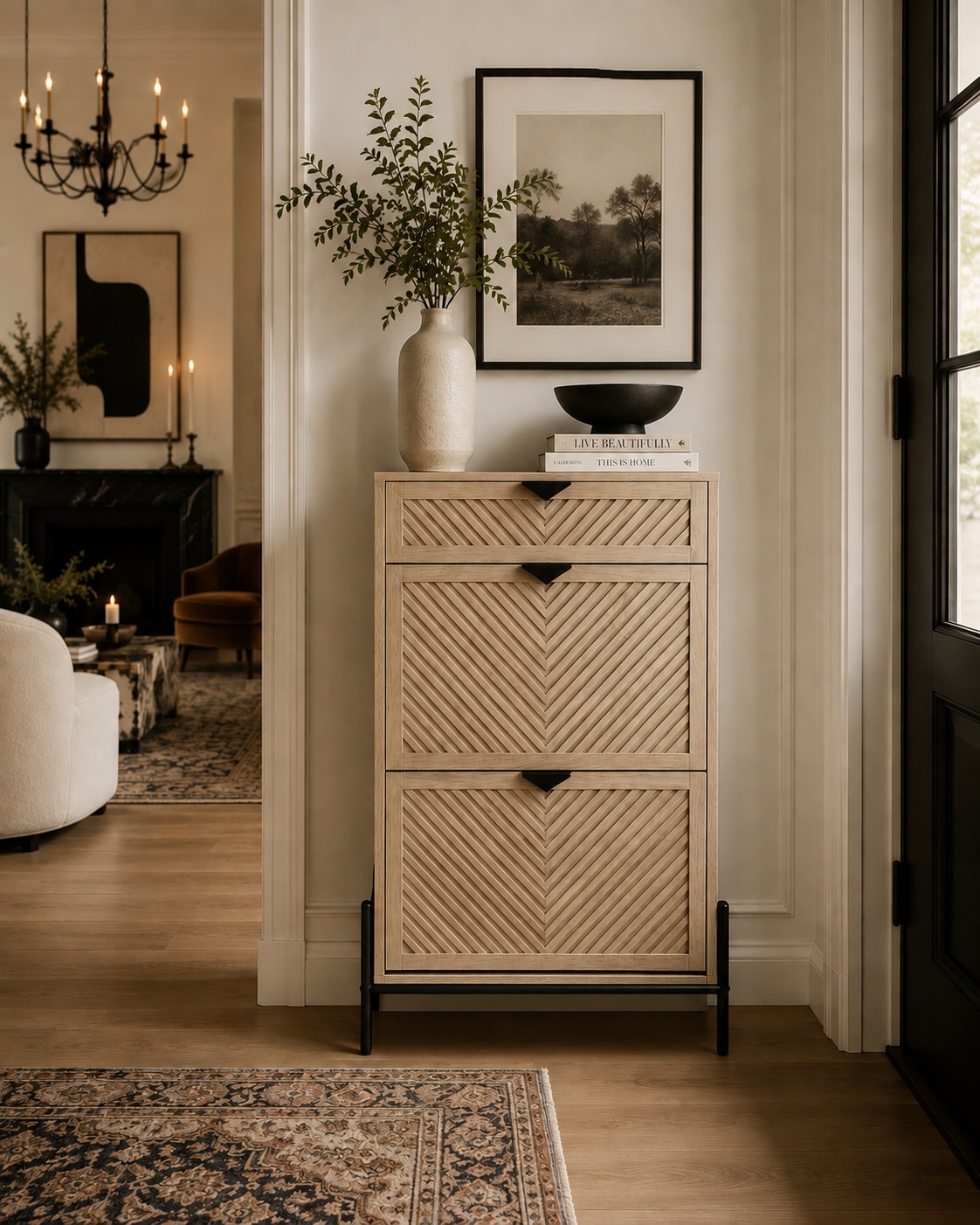
Some things are useful. Some things are beautiful. And some things are a pile of sneakers by the front door.
Not everything needs its moment. 😂
One of the fastest ways to make a room feel calmer is to identify the categories creating the most visual noise and give them closed storage.
The entryway is a perfect example. Shoes are usually the problem, not because owning shoes is particularly offensive, but because a dozen different colors, shapes, soles, laces, and sizes sitting in one place create instant visual clutter.
Instead of adding an open shoe rack and displaying the entire collection, look for a closed shoe-storage cabinet that reads more like furniture.
A streamlined cabinet with attractive doors, elevated legs, and a finished top can function almost like a console table while keeping the actual shoe situation behind closed doors. And yes, tall legs that let you vacuum underneath absolutely count as good design.
Beauty and access to dust bunnies can co-exist.
Designer Tip
When shopping for closed storage, temporarily ignore what the retailer calls the piece.
Look at its:
silhouette · doors · hardware · legs · finish · proportions
If you removed the words shoe cabinet from the listing, would you still want that piece of furniture in your room? If the answer is yes, you’ve probably found a great storage solution.
Why This Works
Closed storage reduces the number of individual objects your eye has to process. Instead of seeing fifteen things, you see one intentional piece of furniture.
That visual simplicity helps the entire room feel calmer.
2. Make Your Furniture Work Twice
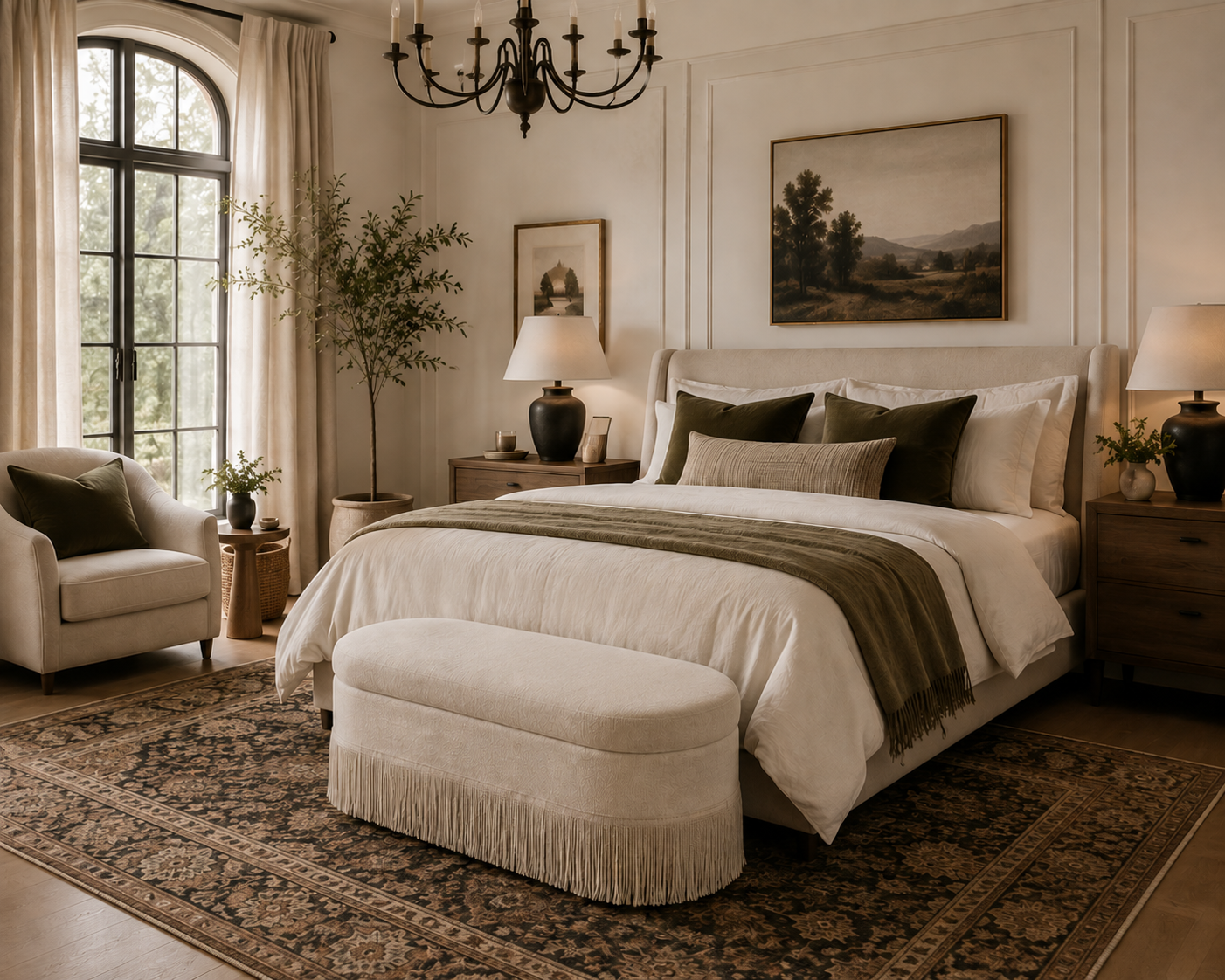
When space is limited—or when you simply don’t want to fill a room with unnecessary furniture, every piece should earn its footprint.
That’s where multifunctional storage furniture becomes incredibly useful.
A storage ottoman or bench can provide:
hidden storage + extra seating + a place to put your feet + another layer of color or texture
All while occupying the same amount of floor space as a regular ottoman.
This is particularly useful in bedrooms and living rooms, where bulky practical storage can quickly make the room feel more utilitarian than inviting. Instead of bringing in another plastic tote or storage bin, choose something you would have wanted in the room even if there weren’t storage inside it.
A tasseled, upholstered ottoman, for example, can add personality while quietly hiding extra blankets, pillows, books, games, or whatever else tends to migrate around the room.
The storage is almost a bonus.
And that’s exactly the point.
Designer Tip
For multifunctional furniture, ask yourself:
Would I still like this if it didn’t open?
If yes, you’re buying furniture that happens to provide storage.
If no, you may just be buying a storage container disguised as furniture.
There is a difference.
3. Turn Everyday Storage Into Decor
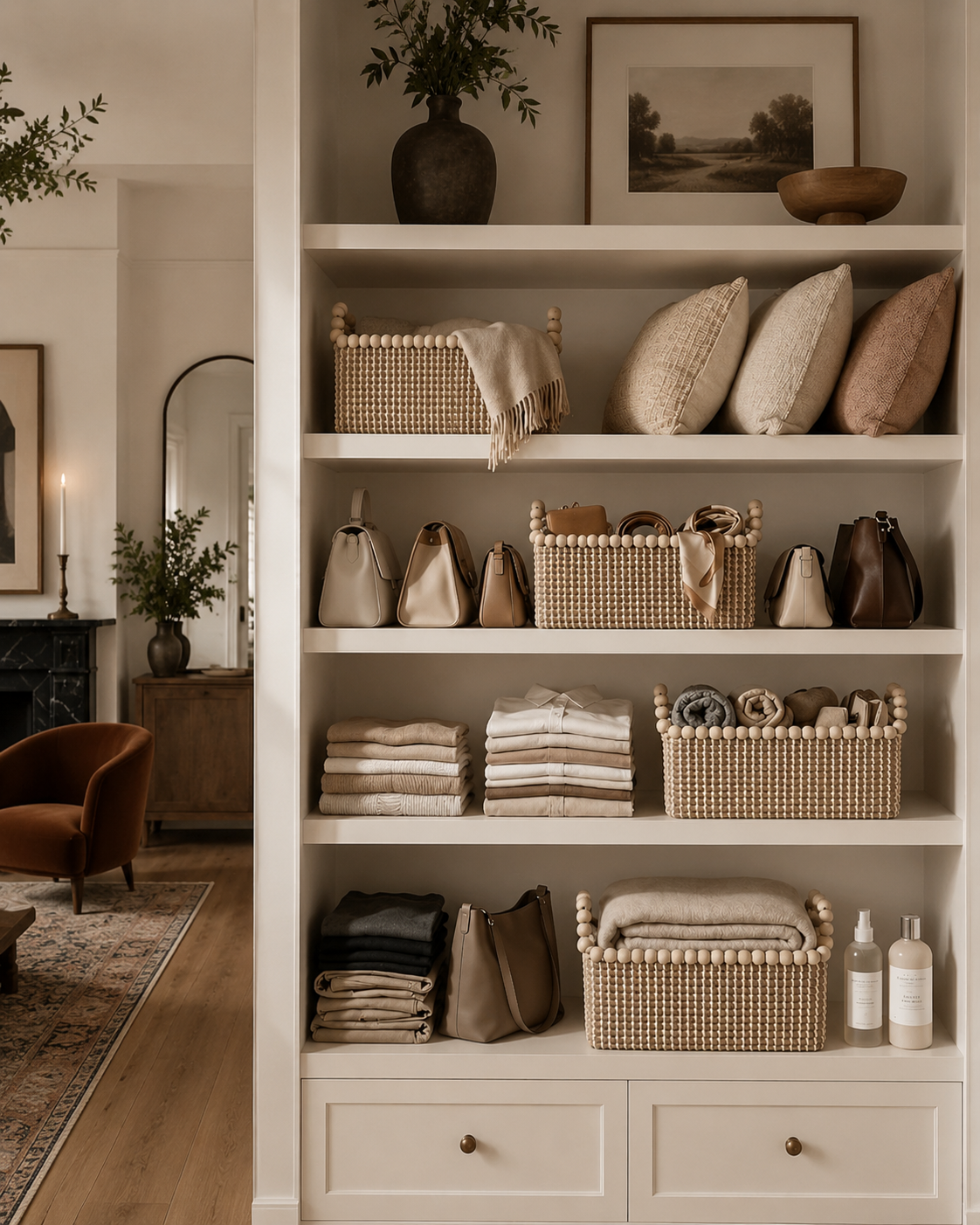
Not everything needs to disappear behind a door.
Sometimes the better solution is to make the container itself beautiful enough to display.
This is where baskets, boxes, trays, and decorative containers earn their keep.
A set of handwoven seagrass baskets on open shelving can hold everything from cords and remotes to toiletries, craft supplies, office clutter, or miscellaneous household objects while adding natural texture to the room.
Suddenly, the storage isn’t interrupting the styling.
It is the styling.
This works particularly well in boho, modern organic, eclectic, and collected interiors because natural materials add warmth and prevent shelving from feeling overly polished or sterile.
Just remember: open storage works best when the containers create some visual consistency.
Five unrelated containers can become their own form of clutter.
A small collection of coordinated baskets? Now we have a system.
Designer Tip
If you're using baskets on open shelving, vary the objects around them rather than the baskets themselves.
Try:
basket + books + plant + pottery
rather than:
basket + different basket + another basket + mysterious bin
Your shelf is still allowed to be a shelf. 😂
4. Use the Walls When Floor + Counter Space Are Precious
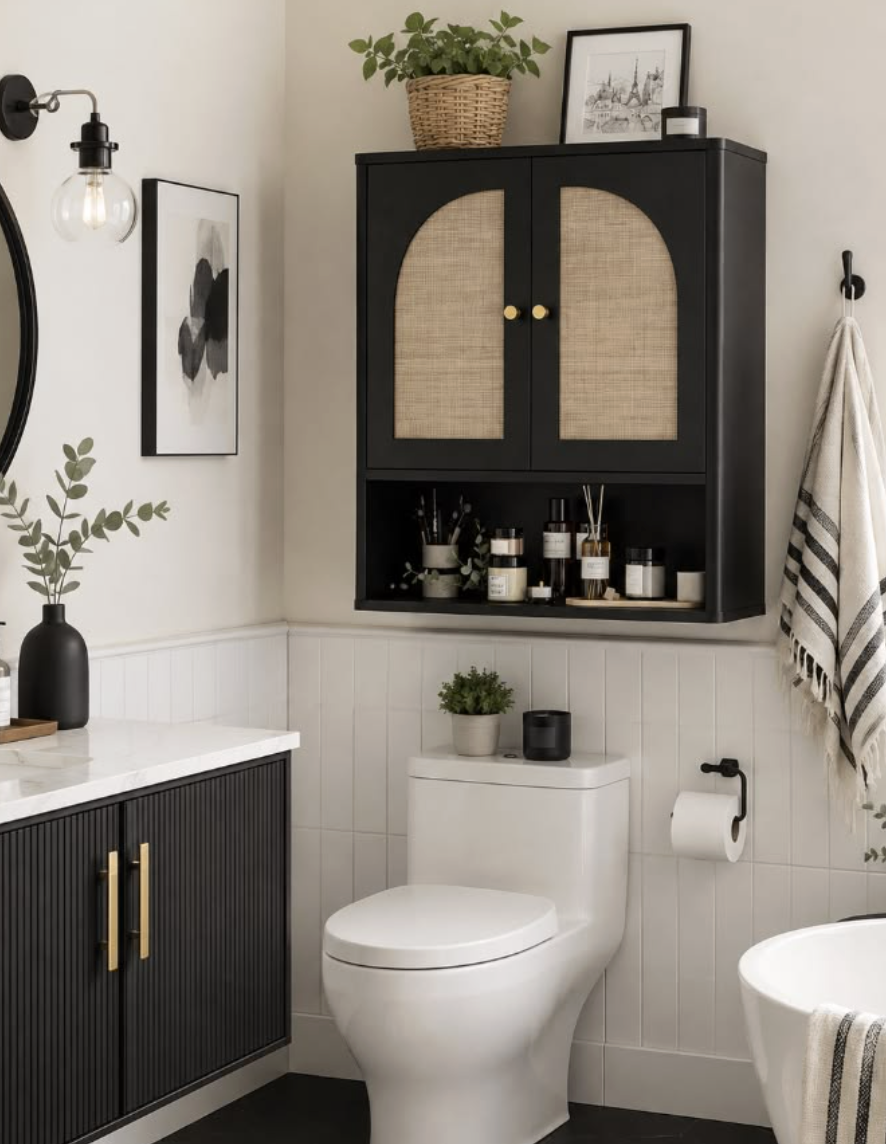
One of the most overlooked storage surfaces in a room is sitting directly in front of you.
The wall.
Bathrooms are particularly guilty of wasting it.
When floor space and countertop space are limited, wall-mounted storage lets you add function without making the room feel more crowded. A decorative wall cabinet can hold toiletries, skincare, medicine, extra toilet paper, cleaning supplies, or all of the tiny bathroom objects that otherwise stage a hostile takeover of the vanity.
And because the cabinet is visible, its appearance matters. Look for interesting door details, natural texture, attractive hardware, or a shape that makes the piece feel intentional!
A rattan-front wall cabinet, for example, brings warmth and texture to the bathroom while giving all those practical necessities somewhere to disappear.
This particular style also comes in natural oak finish and a rustic white finish!
Why This Works
Vertical storage draws the eye upward and frees the surfaces we interact with most.
That creates two benefits at once:
more usable space + less visible clutter
And in a small room, that can completely change how spacious it feels!
5. Let the Biggest Storage Piece Make a Statement
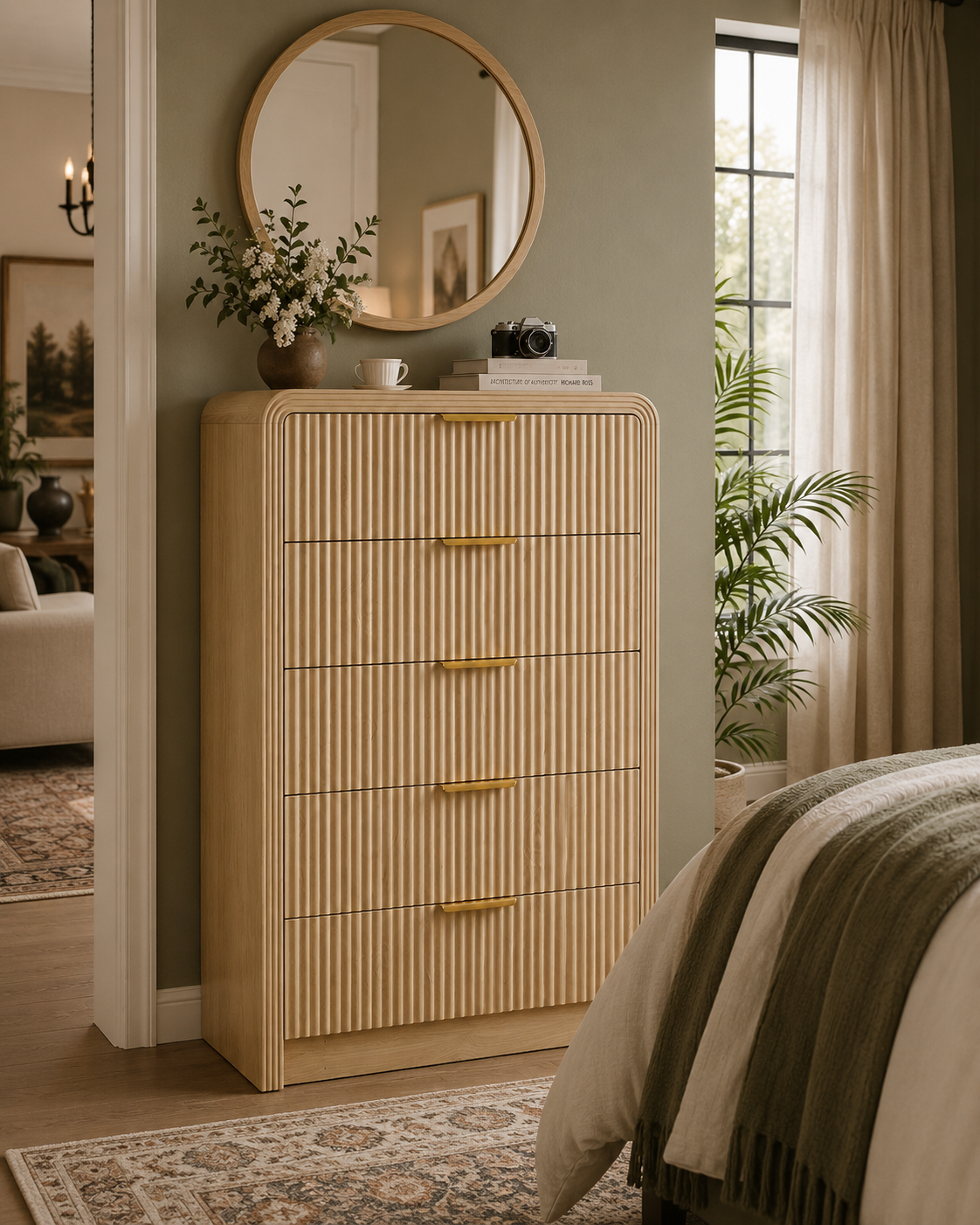
Large storage furniture is sometimes treated like something that needs to disappear into the background.
It doesn’t.
A dresser, sideboard, cabinet, or credenza occupies a significant amount of visual space. Instead of apologizing for it, let it contribute something to the room.
Interesting drawer fronts, fluting, curved corners, sculptural hardware, beautiful wood grain, or an unexpected color can turn necessary storage into an anchor piece.
A tall fluted dresser, for example, can provide substantial bedroom storage while introducing texture and architectural detail at the same time.
Now the piece isn't merely holding clothes. It's helping establish the design language of the room.
Designer Tip
The larger the piece, the more attention you should pay to its shape and texture.
Small accessories can disappear into a room.
A five-drawer dresser cannot.
If you're dedicating that much visual real estate to something, make sure it's contributing to the look you're trying to create.
The Rule That Makes Stylish Storage Much Easier
When you’re deciding what should be displayed and what should be hidden, remember this:
Open storage is for the pretty stuff. Closed storage is for the chaos.
Open shelves are wonderful for:
books · plants · pottery · beautiful baskets · framed photos · collected objects
Closed cabinets are wonderful for:
shoes · cords · paperwork · toiletries · cleaning supplies · miscellaneous life debris
You do not receive extra decorating points for displaying the Wi-Fi router.
😂
There are exceptions, of course. But when a room feels visually cluttered and you can’t quite figure out why, look at what you're asking your open storage to display.
Sometimes the room doesn't need fewer belongings.
It just needs fewer belongings auditioning to become decor.
🌿 The Potted + Styled Takeaway
A beautifully organized home doesn’t have to look obsessively minimal. It doesn’t need matching labels on every container and it certainly doesn’t require pretending you don't own things.
The goal is much simpler:
Give everyday life somewhere beautiful to land.
Hide the visually noisy things.
Display the things worth seeing.
Choose furniture that works harder.
Use vertical space when floor space is limited.
And whenever possible, choose storage you would have wanted in the room anyway.
Because the best storage doesn't just organize your home. It helps style it.
🌿 Continue Your Styling Journey
Once the clutter has somewhere to go, styling the surfaces around it gets much easier.
Start at the front door:
→ How to Style a Warm & Welcoming Entryway Without Spending a Fortune
Make everyday organization part of the decor:
→ How One Decorative Tray Can Transform Every Room
Style what actually deserves to stay out:
→ How to Style a Coffee Table That Feels Collected, Not Cluttered
And make the whole room feel warmer:
→ Turn Off the Big Light: How to Layer Lighting for a Cozy Home
