How to Style a Coffee Table That Feels Collected, Not Cluttered
TODAY’S LESSON:
Layering creates interest. Editing creates calm.
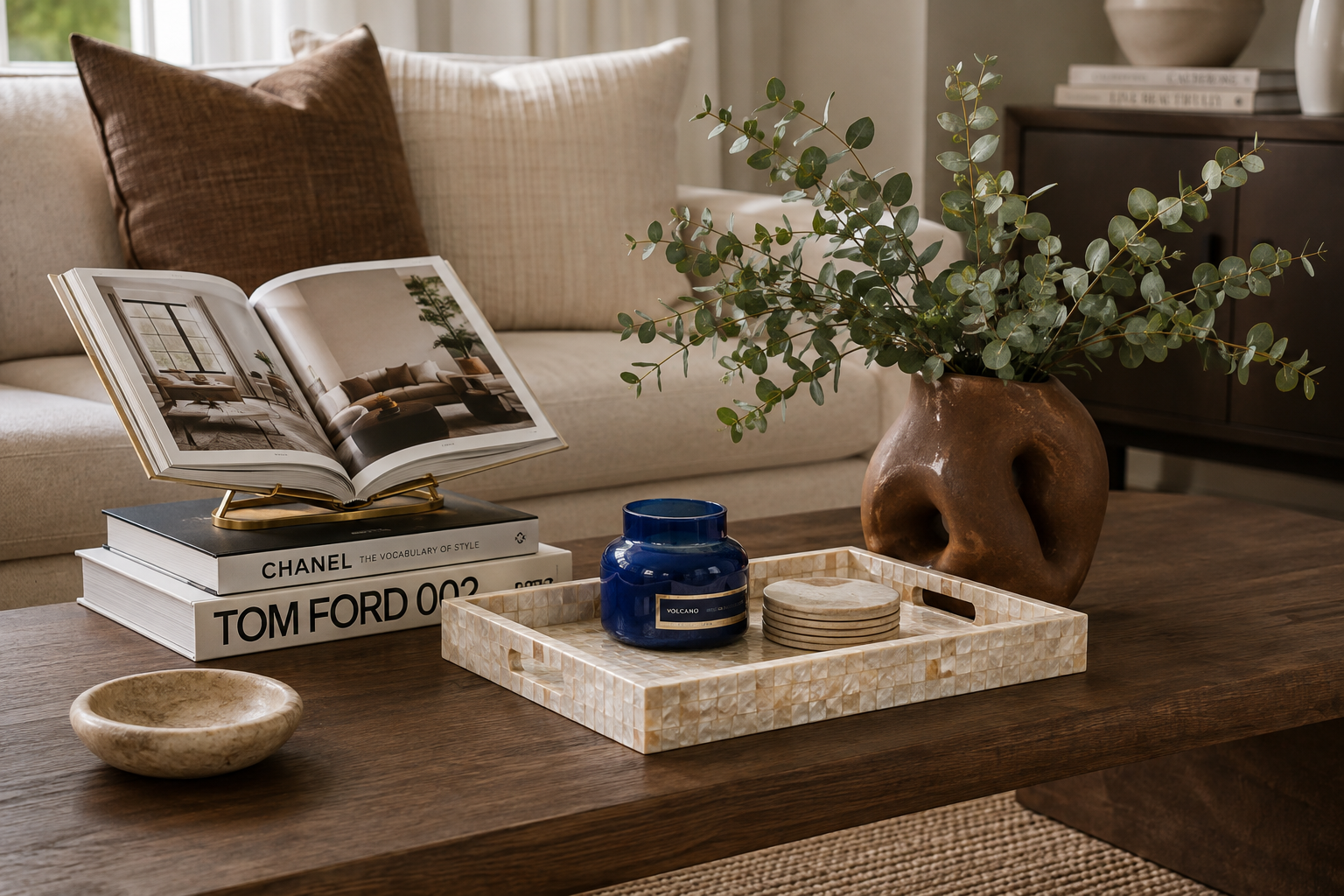
Beautiful homes don't happen by accident.
There is a surprisingly fine line between a beautifully styled coffee table and a coffee table that looks like it ran out of places to put things. The good news? You don't need a dozen decorative objects, or a haul of new trinkets from HomeGoods, to get it right.
A well-styled coffee table is really about balance: mixing heights, shapes, textures, and things you genuinely love while leaving enough breathing room for the table to still function. At some point, someone is going to need somewhere to put the coffee.
At Potted + Styled, we like to think of coffee table styling as a simple formula:
Anchor → Layer → Height → Life → Personality → Edit
Once you understand those six ideas, you can recreate the formula with pieces you already own, a few new finds you love, or a combination of both.
Let's style a coffee table!
🌿 Step 1: Start With an Anchor
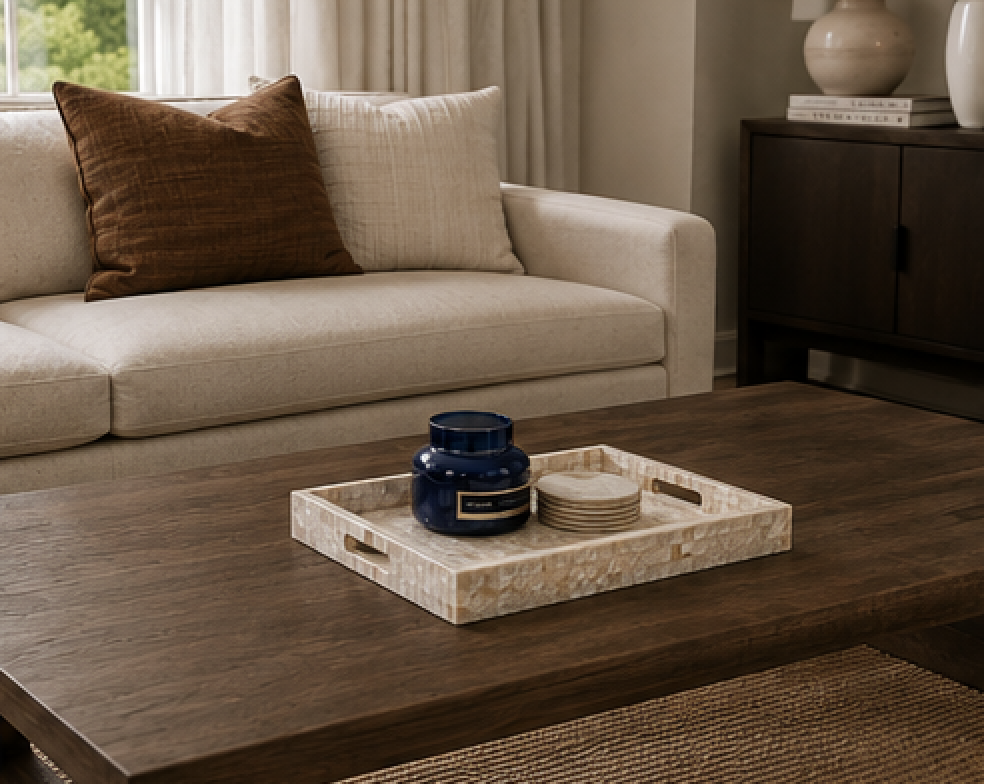
When several smaller objects are scattered across a coffee table, even beautiful pieces can start to read as clutter. An anchor, like a decorative tray, gives those objects a visual home.
A decorative tray is one of our favorite ways to do this because it instantly turns several individual pieces into one intentional grouping.
For this look, we chose a Mother-of-Pearl/Shell-inlay Tray. The subtle variation in the shell adds organic texture and visual interest.
Inside the tray, we keep things simple:
a favorite candle
a small stack of coasters OR a size-appropriate framed photo
That's it.
The goal isn't to fill the tray.
A tray should corral other beautiful items, not become a beautifully organized container for more clutter.
🌿 Why This Works
The eye reads the tray and everything inside it as one visual unit. Instead of seeing several small objects scattered around the table, you see one intentional styling zone.
And because trays are portable, you can easily lift the entire grouping away when you need more table space.
SHOP THIS LOOK →
Volcano Candle - This scent happens to be one of my favorite scents of all time but also the dark blue glass gives us a little bit of bold color against the creamy white tray!
Set of 4 Stone Coasters - Stone gives us an extra added material element PLUS the cork backing on this set means they won’t scratch your table when someone actually uses them.
📚 Step 2: Layer With Books You Actually Love
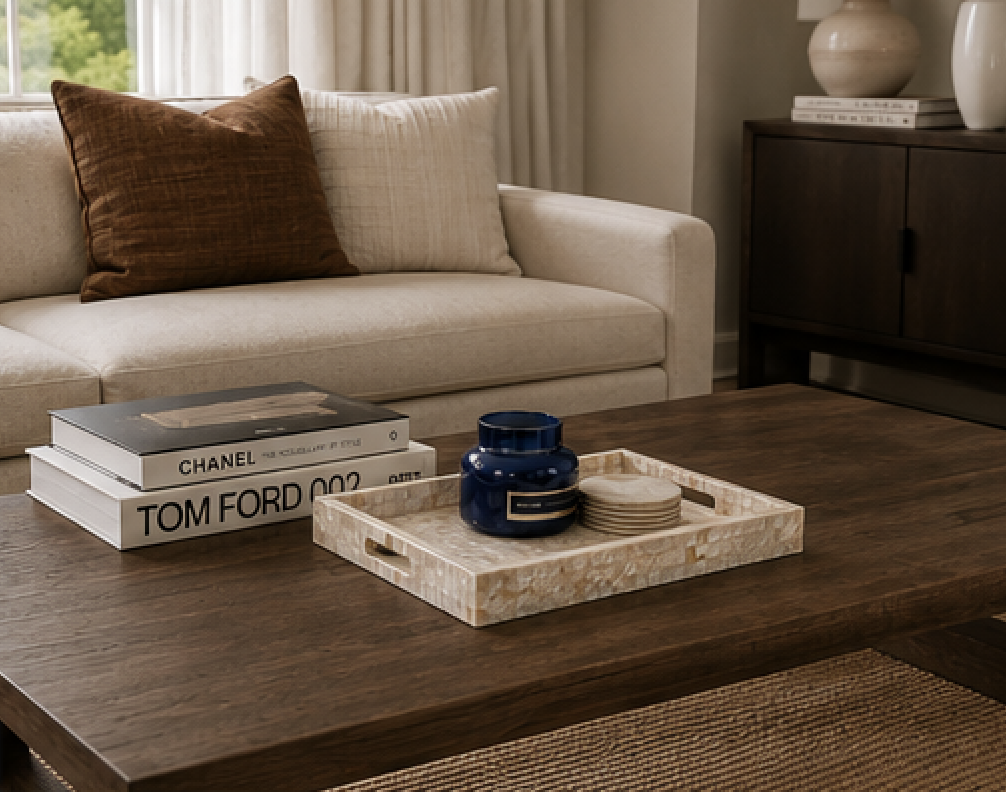
Coffee table books are one of the easiest ways to introduce height, color, art, and personality at the same time, but here's our rule: Don't buy books solely because their spines match your sofa.
It's perfectly fine to consider how a book looks, and we're certainly not going to pretend a beautiful cover isn't part of the fun, but start with subjects you actually care about.
Interior design. Fashion. Photography. Architecture. Travel. Gardens. Art. Music. Cars. Whatever makes you want to pick up the book and open it! The best coffee table books don't simply coordinate with your decor, they reveal something about what you love.
How to Build a Coffee Table Book Stack
Start with one substantial book as your foundation, then layer one or two smaller books on top. You don't need seven.
Two or three books usually provide enough variation in height without turning half the coffee table into a satellite branch of your local library.
Mixing subjects can make the stack feel especially personal! An interiors book paired with fashion or art feels collected over time rather than purchased as a matching set.
✨ Designer Tip: Try Displaying One Open
Have a coffee table book with pages you particularly love? Instead of stacking it flat, place it open on a low-profile book stand. We particularly love this Acrylic Open Bookstand because it feels light and airy, not heavy and bulky like a piece of furniture sitting on another piece of furniture.
An open book introduces height and turns the photography or artwork inside into part of the room itself. Change the spread periodically and you essentially have rotating artwork for your coffee table.
Because an open book carries more visual weight than a closed one, remove something else when you use it.
Adding height shouldn't mean adding clutter.
📚 Coffee Table Books We Love
We could probably write an entire Style Guide about coffee table books. Actually... We probably will.
For now, here are five that earned a place in our edit—not simply because they're beautiful, but because there's something worth discovering inside them.
For the Design Lover: Kelly Wearstler — Synchronicity
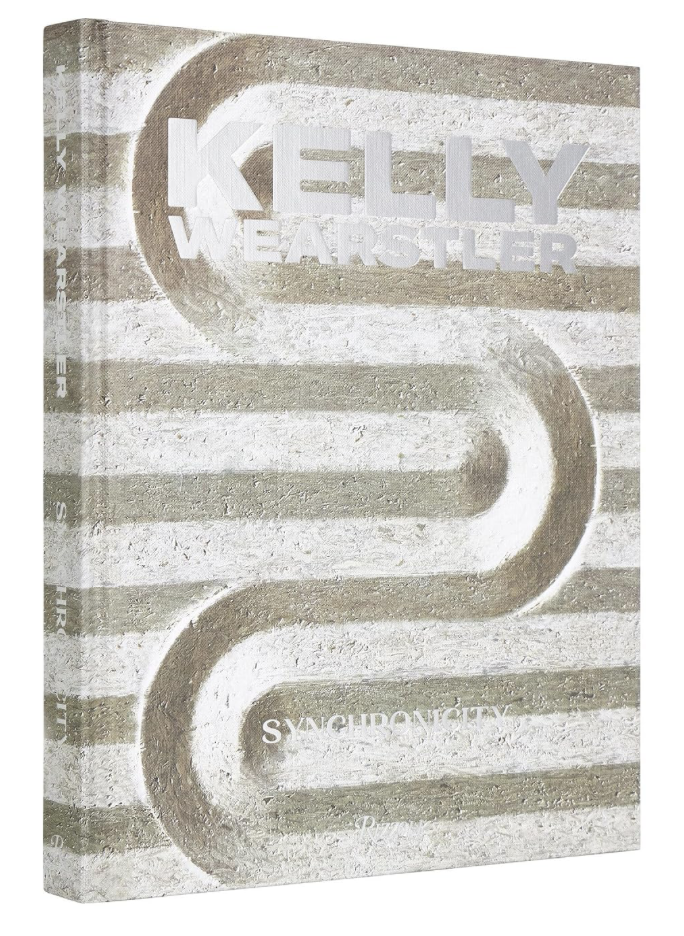
Bold, sculptural, and anything but predictable, Synchronicity celebrates Kelly Wearstler's fearless approach to shape, material, scale, and color.
It's a beautiful statement book, but more importantly, it's full of interiors that make you want to look twice.
SHOP THE BOOK → Kelly Wearstler’s Synchronicity Coffee Table Book
The Splurge: The Big Book of Chic by Miles Redd
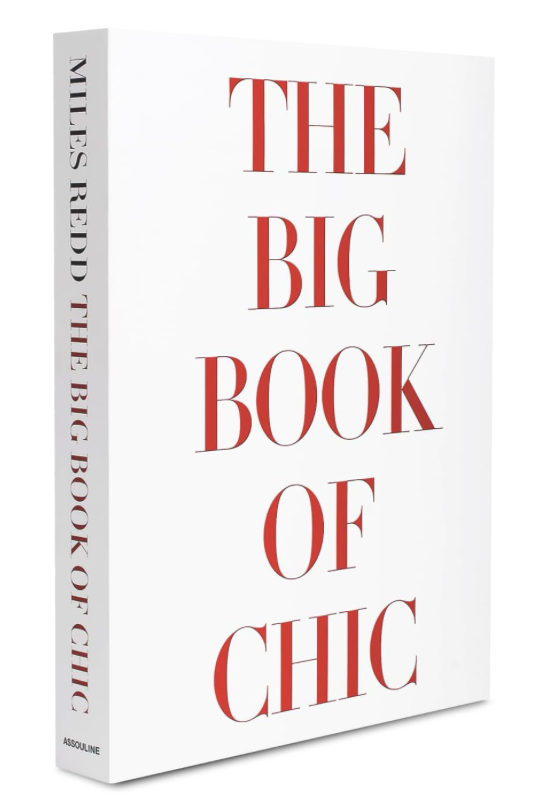
We'll say it upfront: this one is an investment. But The Big Book of Chic has earned its reputation as a design favorite. Miles Redd's richly layered interiors are colorful, personal, and unapologetically interesting.
Its substantial size also makes it a fantastic anchor book for a stack—or let it stand alone and give it some room to breathe.
SHOP THE BOOK →Miles Redd’s The Big Book of Chic
The Timeless Classic: Architectural Digest at 100: A Century of Style

If you love interiors, this is the kind of book you'll return to again and again.
Spanning a century of remarkable homes and design, Architectural Digest at 100 provides plenty of inspiration inside while its understated exterior makes it incredibly easy to style.
Coincidentally, also beige. Books with colorful covers to come below.
SHOP THE BOOK → AD at 100: A Century of Style
For the Fashion Lover: Fashion History from the 18th to the 20th Century

Leave it to TASCHEN to make fashion history feel like a work of art.
This substantial volume brings fashion, photography, history, and color into the mix—and keeps your coffee table collection from becoming Interior Design Books Sitting Beside More Interior Design Books.
It's exactly the kind of book that invites someone to stop and flip through a few pages.
SHOP THE BOOK → Taschen’s Fashion History
For the Art Lover: Taschen’s Andy Warhol Polaroids

A little Warhol never hurt a coffee table.
This collection of Andy Warhol's early work brings art, playfulness, and personality into a stack—and gives us a welcome reminder that everything on your coffee table does not need to match.
Pair it with a classic interiors book and you've instantly created something more personal and unexpected.
SHOP THE BOOK → Taschen’s Warhol Polaroids 1958 - 1987
🌿 The Takeaway
Choose books that tell people something about you. Three thoughtfully chosen books can say far more than twelve purchased because they happened to have coordinating beige spines.
And if you genuinely own twelve books you love? We understand, you may simply need another bookshelf.
🌿 Step 3: Add Height, Shape & Something Living
Now that we have several low horizontal elements, the tray, its accessories, and books, the table needs something that moves upward.
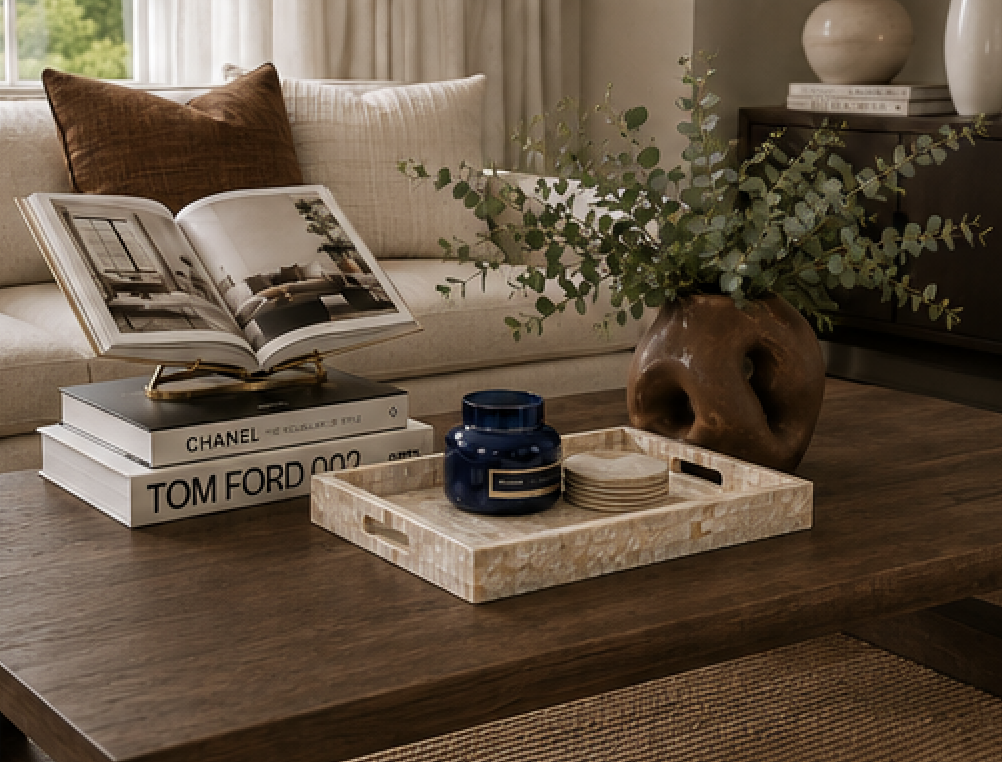
A vase is an easy way to introduce height and shape.
But if you're going to add one, we like choosing a vase that's interesting enough to stand on its own. This Glazed, Ceramic Vase option comes in a chocolate-y brown, a creamy white, or a sunshiny yellow/orange option for a fun pop of color. Its organic shape adds movement and visual interest.
Filled with greenery, it gives us:
height
shape
texture
movement
life
That's a hardworking little vase.
✨ Designer Tip: Let Pieces Do More Than One Job
A sculptural vase doesn't require another decorative sculpture sitting beside it. It is the sculpture.
Choosing pieces that perform multiple visual roles is one of the easiest ways to create an interesting table without covering every available inch.
🌿 Add Something Living — or Something Convincingly Close
If you ask us, real greenery wins every time. A vase of fresh flowers, a few leafy branches, or a beautiful houseplant brings something to a room that simply can't be manufactured: natural movement, variation, texture, and life.
But we also live in the real world.
Not everyone wants to buy fresh flowers every week, not every coffee table gets enough light for a living plant, and sometimes you just want something beautiful that doesn't require watering, pruning, or discovering three weeks later that you've been displaying a vase of very expensive dead sticks. That's where good faux greenery earns its place.
Look for stems with natural variation in color and shape rather than perfectly identical leaves, and arrange them loosely instead of trying to create a giant, symmetrical bouquet.
A few convincing branches in an interesting vase can give you the movement and organic shape you're after without pretending they're a replacement for the real thing.
Our rule: Choose real when it's practical. Choose beautiful faux when it isn't.
✨ Designer Tip: Faux Shouldn't Look Too Perfect
Faux greenery often looks most artificial straight out of the package.
Before placing it in your vase, gently bend and separate the stems so they move in different directions. Turn a few leaves, vary the heights, and let one branch wander farther than the others.
Nature isn't perfectly symmetrical.
Your faux greenery shouldn't be either.
And please remember: Your Coffee Table Greenery Should Not Become a Shrub
A little greenery adds life and movement. A giant arrangement adds an obstacle. If you can no longer comfortably see the person sitting across from you, we've crossed the line from styling into landscaping.
Keep your arrangement low enough, or airy enough, that sightlines remain open.
The shrub belongs outside.
A few of our favorite, affordable faux greenery options:
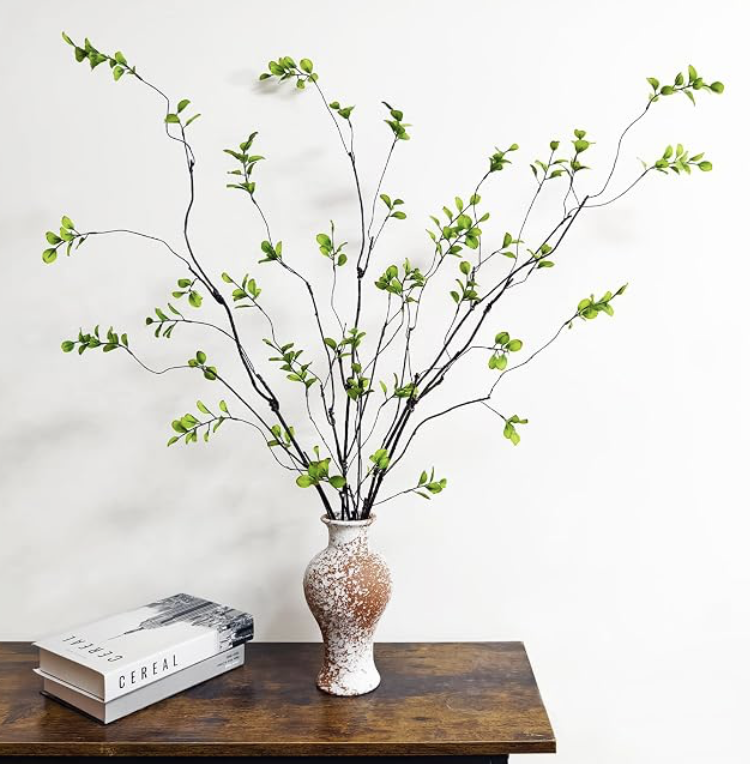
Tall, branch-y and airy, these Faux Eucalyptus Branches give serious height and visual interest without overwhelming the space
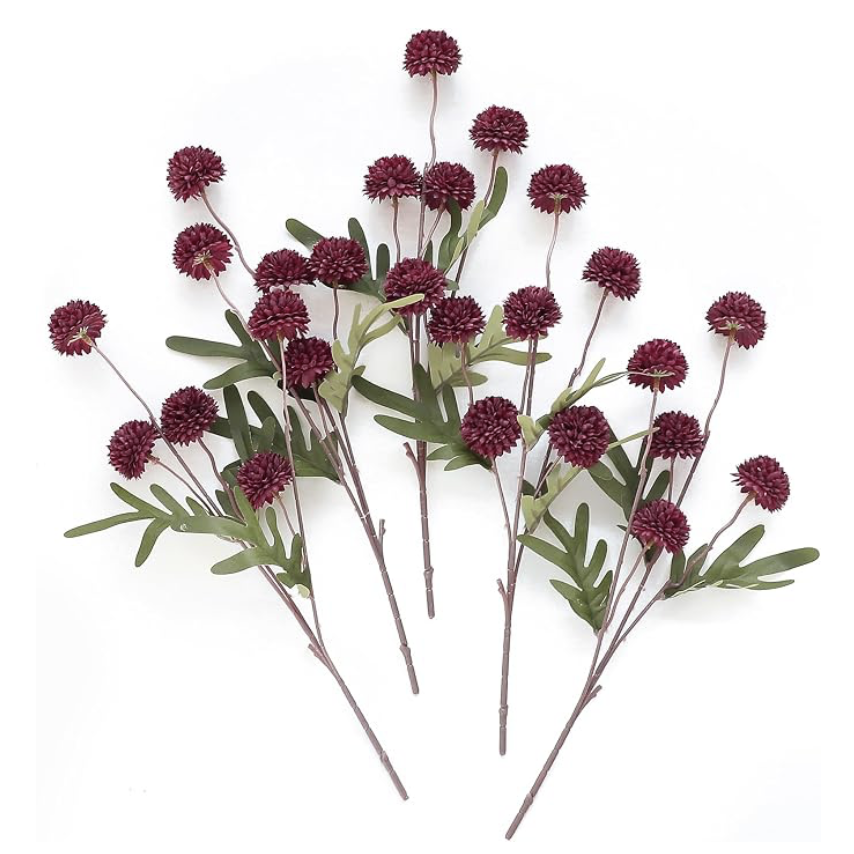
For a shorter option, with not only a greenery element but also a burgundy bloom look, these Faux Chrysanthemum Stems are great for all seasons but particularly fall and winter.
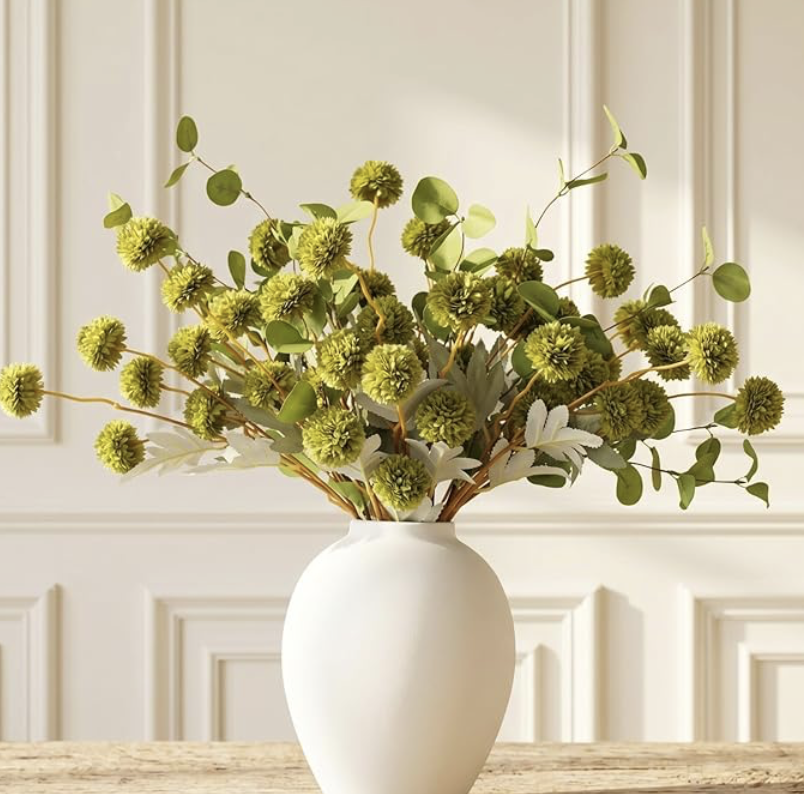
If you’re still looking to stick with green, but want something that looks a little more substantial than branches, we LOVE this combination of Green Florals with Eucalyptus Branches.
Step 4: Create Styling Zones
Here's where all of our individual pieces become a composition.
Instead of distributing objects evenly across the entire table, create a few distinct styling zones.
For our table, we used three:
Zone 1: Books + Personality
A small book stack, or an open book on a stand, creates the first grouping.
Zone 2: Tray + Function
Our shell-inlay tray contains the candle and coasters, allowing several small objects to read as one.
Zone 3: Vase + Life
The sculptural vase and branches provide height and organic movement.
And then there's our fourth zone.
Zone 4: Absolutely Nothing
Yes.
Nothing.
A beautifully styled patch of completely empty coffee table. And it may be the most important zone of all.
🌿 Step 5: Edit, Edit, Edit
Once you've arranged everything... take something away.
We're serious.
Coffee tables need breathing room. Empty space gives your eye somewhere to rest and allows the pieces you did choose to feel more important.
It also allows your coffee table to remain a coffee table.
You should still be able to:
set down a drink
put up your feet
place a remote somewhere
move things easily when guests arrive
actually live in the room
✨ The Potted + Styled Rule
Before you add one more thing, try removing one.
If the arrangement still looks complete after you've taken something away, you probably didn't need it.
That's the difference between layered and cluttered. Layering creates interest. Editing creates calm.
🌿 The Finished Look
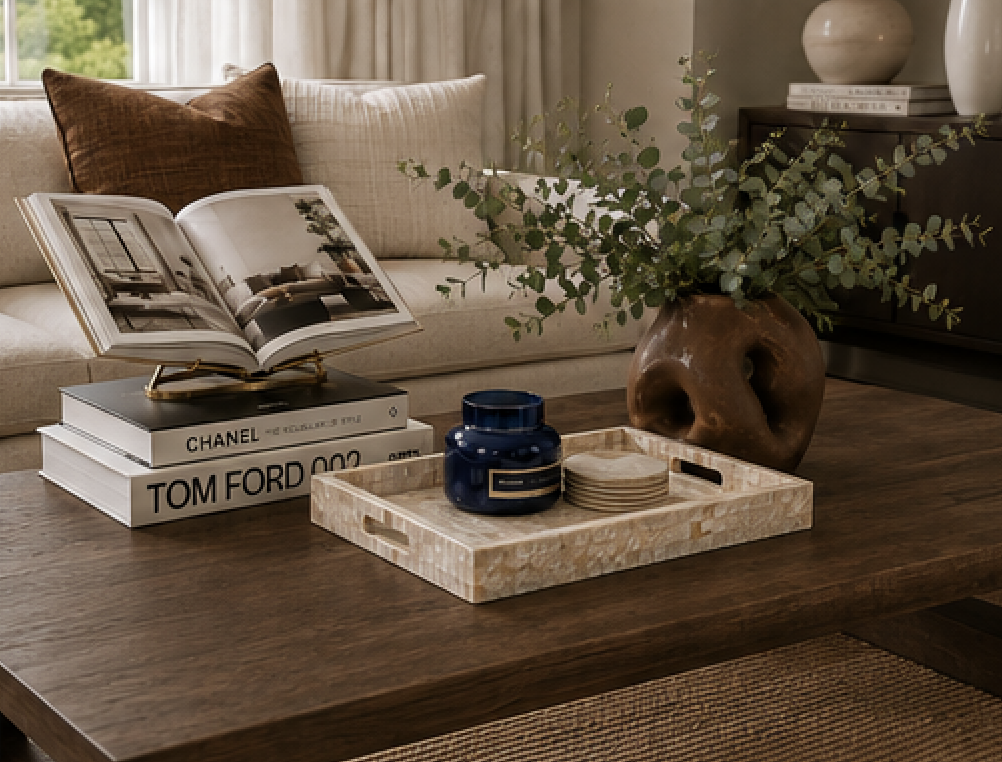
This table works because no single object is doing all the talking.
The books add layers and personality.
The tray creates structure and function.
The candle brings warmth and color.
The sculptural vase introduces shape.
The greenery brings movement and life.
And the empty space allows all of those pieces to breathe.
It simply feels collected.
🌿 Signature Takeaway
A beautiful coffee table isn't created by finding the perfect set of accessories. It's created by understanding how different pieces work together.
Start with an anchor.
Layer in books you actually love.
Vary the heights and shapes.
Add something living.
Bring in a little personality.
Then stop.
Actually—stop before you think you're finished.
Your home should feel collected over time, not assembled in an afternoon.
And remember:
Beautiful homes don't happen by accident.
But they also don't happen by filling every available surface.
Sometimes the most intentional styling decision you can make is leaving a little room for life to happen.
And, of course, somewhere to put the coffee.
🌿 Continue Your Styling Journey
If this guide has you looking around your home for the next surface to tackle, keep going:
→ How One Decorative Tray Can Transform Every Room
Learn how to use one of our favorite styling shortcuts on kitchen counters, bathroom vanities, nightstands, desks, coffee tables, and entryway consoles.
→ How to Style a Warm & Welcoming Entryway Without Spending a Fortune
Take the same principles of layering, texture, function, and personality beyond the living room and create an entryway that makes a beautiful first impression.
Coming Soon: How to Decorate With Faux Greenery Without It Looking Fake
Because sometimes real isn't practical and faux greenery deserves better than looking like it came straight out of a shipping box.
Potted + Styled
Beautiful homes don't happen by accident. 🌿
