How to Style a Warm & Welcoming Fall Front Porch Without Going Overboard
There is something about the first hint of fall that makes even the most restrained among us want to immediately buy a pumpkin.
And then perhaps another pumpkin. And a mum. And a wreath.
And suddenly you're standing in the seasonal aisle wondering whether your front porch needs a decorative wooden sign announcing that yes, it is, in fact, fall. It does not.
A beautiful fall front porch doesn't have to involve covering every available surface in orange—or replacing everything you already own with something that has a leaf printed on it.
In fact, we think the best seasonal decorating works a little differently.
Seasonal decorating should change the mood of your home… Not the personality of it.
The goal is to take a front porch that already feels like you and layer in warmth, texture, natural elements and a few unmistakably autumnal touches. Think fall atmosphere, not fall theme.
For this Potted + Styled Style Guide, we're breaking down exactly how to style a warm and welcoming fall front porch in seven simple layers—using many of the same pieces you can keep outside long after the pumpkins have left the building.
🌿 Today's Lesson: Layer, Don't Theme
If you remember one thing from this guide, make it this:
Layer, don't theme.
Good seasonal decorating doesn't require replacing your everyday decor. Instead, start with a strong year-round foundation and add a few layers that change the color, texture and mood of the space.
For our porch, that means you'll see plenty of things that aren't technically fall decor at all: a striped outdoor rug, simple planters, rattan lanterns, a plain coir mat.
The season comes through in how those pieces are combined with fall foliage, warm light, a wreath and a very restrained delegation from the pumpkin community.
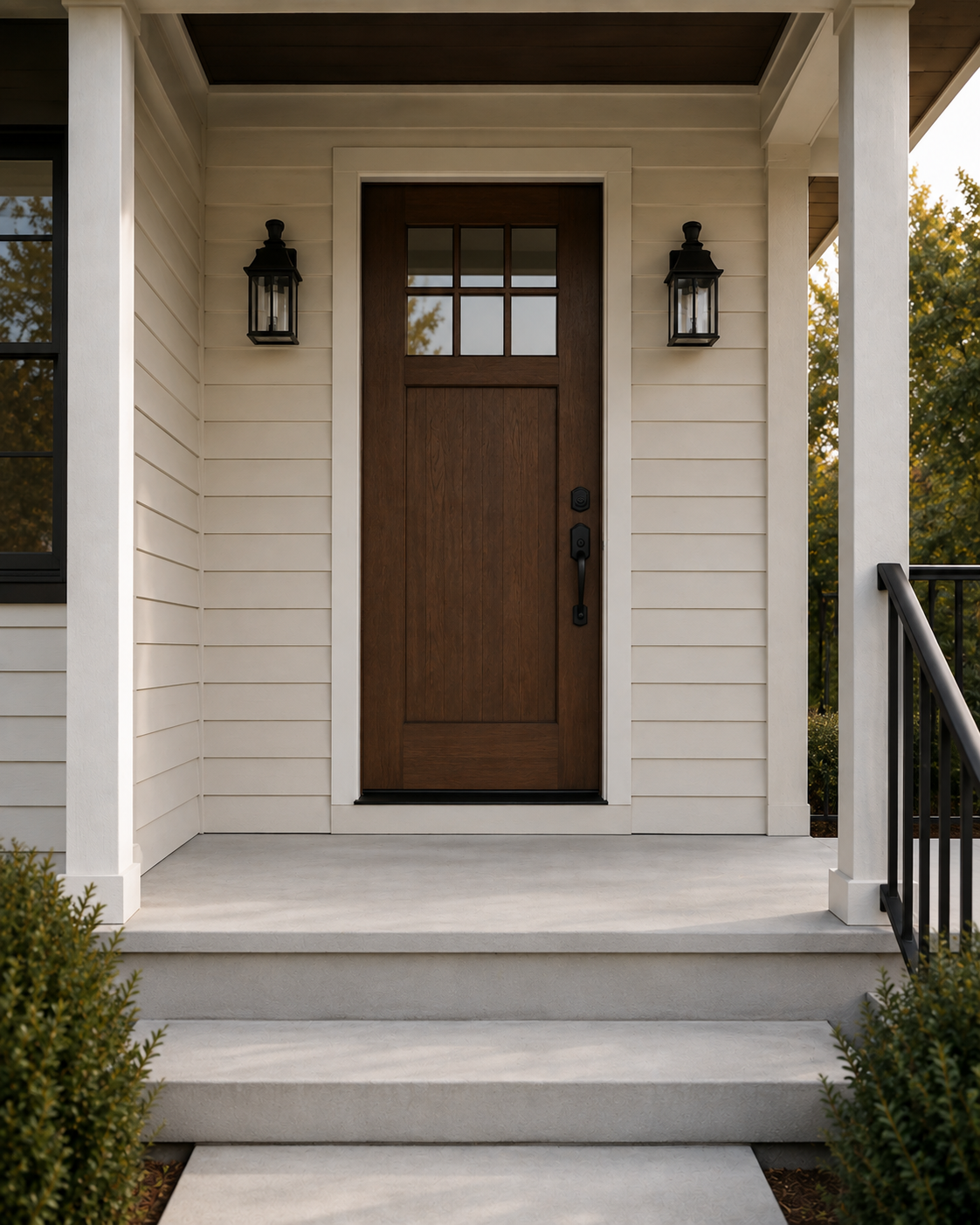
Let's build it… Starting from scratch!
1. Start at the Door: Create a Seasonal Focal Point
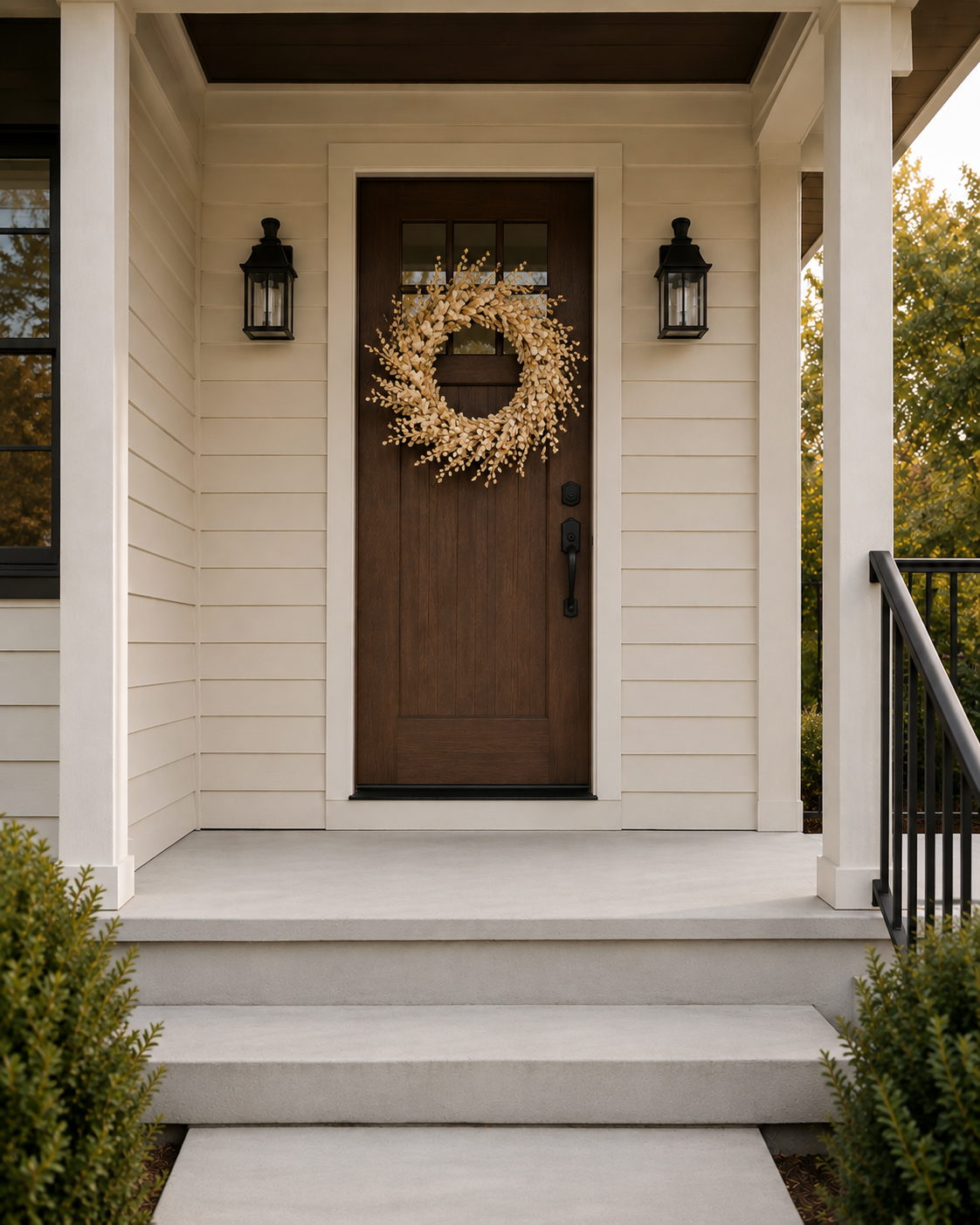
Your front door is already the natural focal point of your porch, so it's the easiest place to establish the seasonal mood.
A fall wreath instantly signals a change in season without requiring you to decorate every square inch around it!
But here's the part that's easy to overlook:
Choose your wreath for contrast.
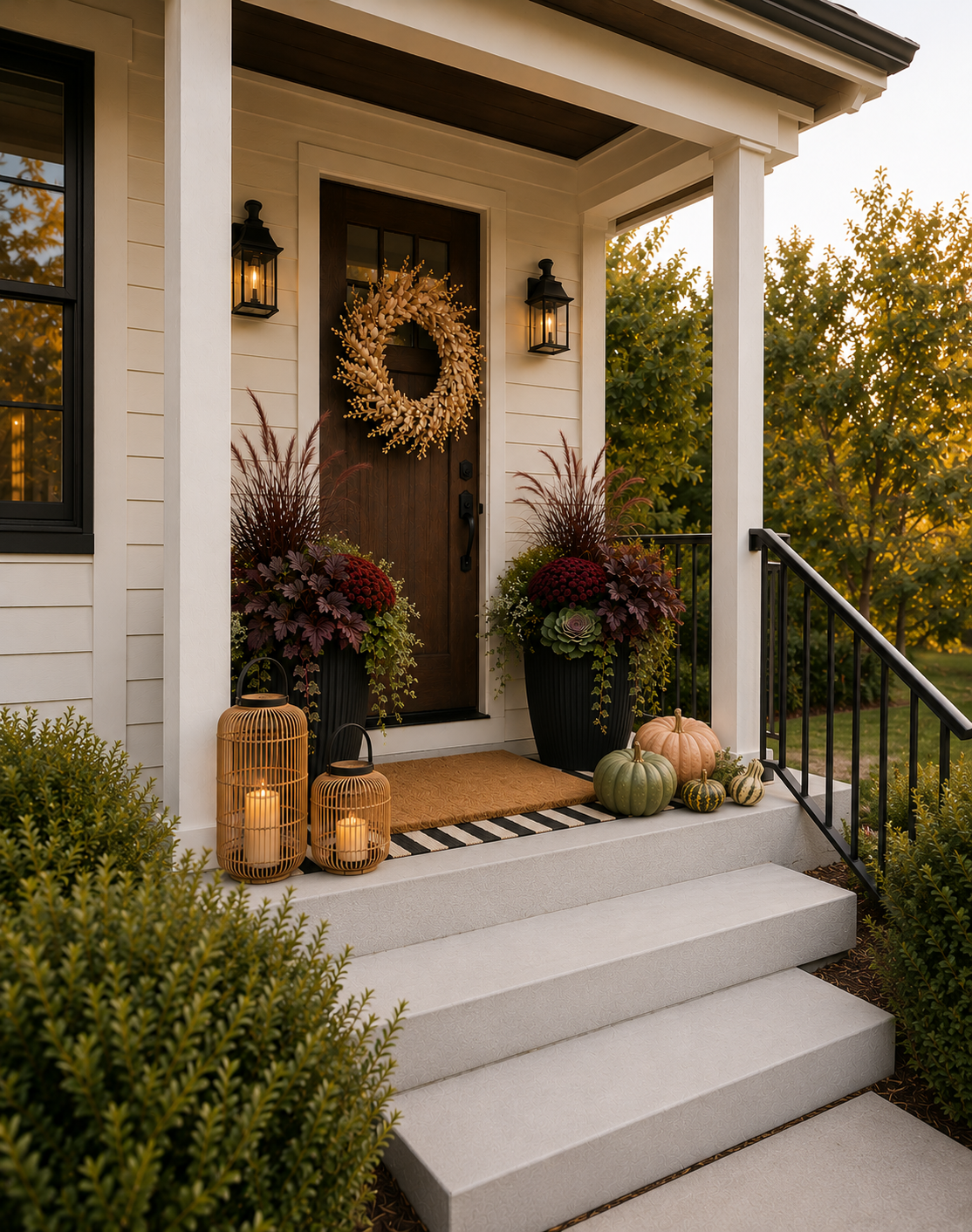
For our dark wood front door, we chose a light champagne-toned fall wreath. The pale, warm color stands out beautifully against the dark wood and keeps the entrance from feeling visually heavy.
On a white, cream or similarly light-colored door? We'd go the opposite direction. The same wreath is available in a deep burgundy, which would create beautiful contrast against a lighter background while introducing that rich autumn color we're using elsewhere!
Potted + Styled Tip
Don't choose seasonal decor only by asking, “Do I like this color?”
Ask: “What will this color look like against what I already have?” Contrast is often what makes an individual piece look intentional. And while orange certainly has a long and distinguished résumé in the field of autumn, your fall porch styling does not need to center around locating every shade of orange on the color wheel.
Champagne, burgundy, plum, olive, rust, chocolate, cream and warm natural woods can communicate fall just as beautifully.
2. Ground the Entry With Layers
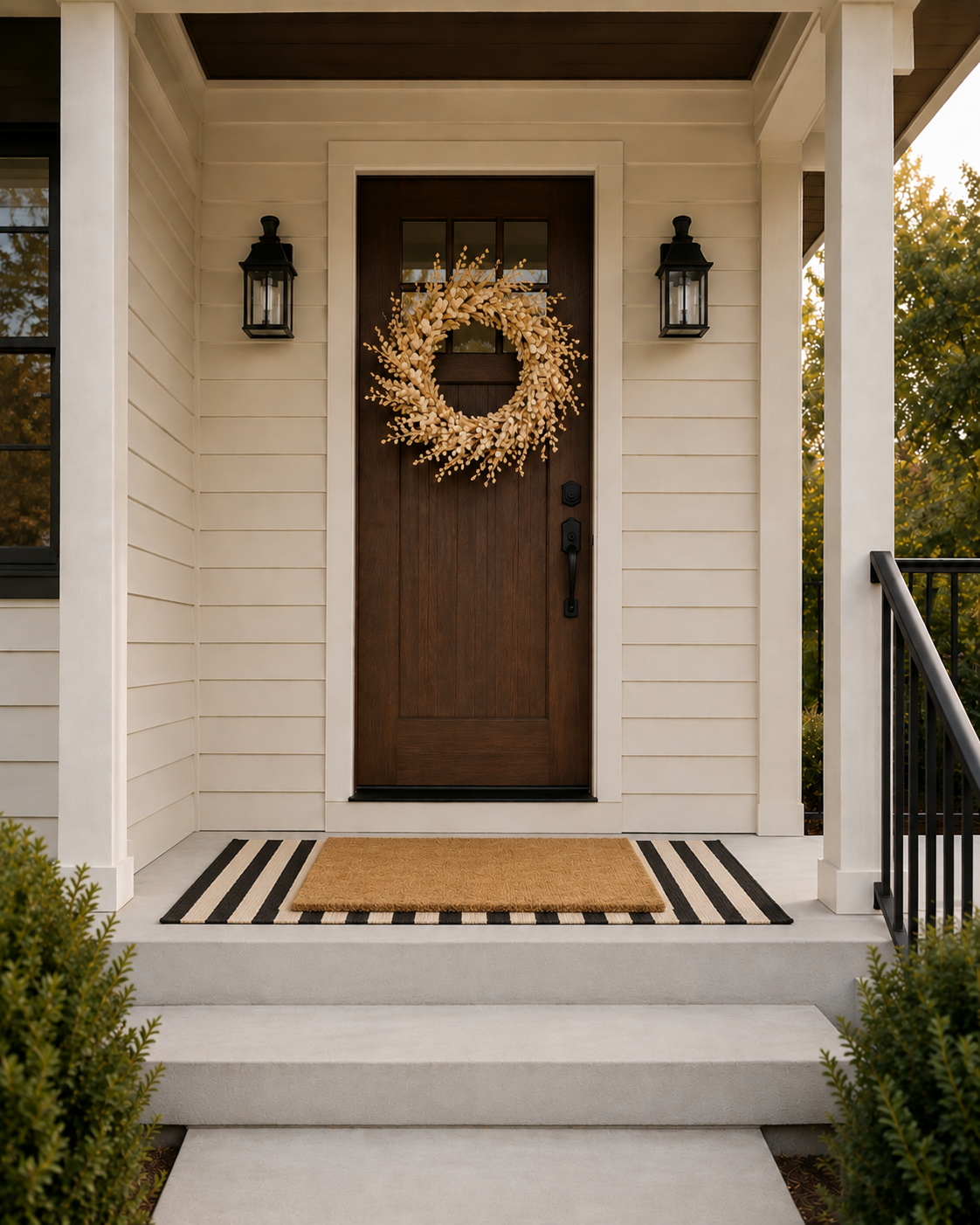
Before adding anything obviously seasonal, let's build the foundation!
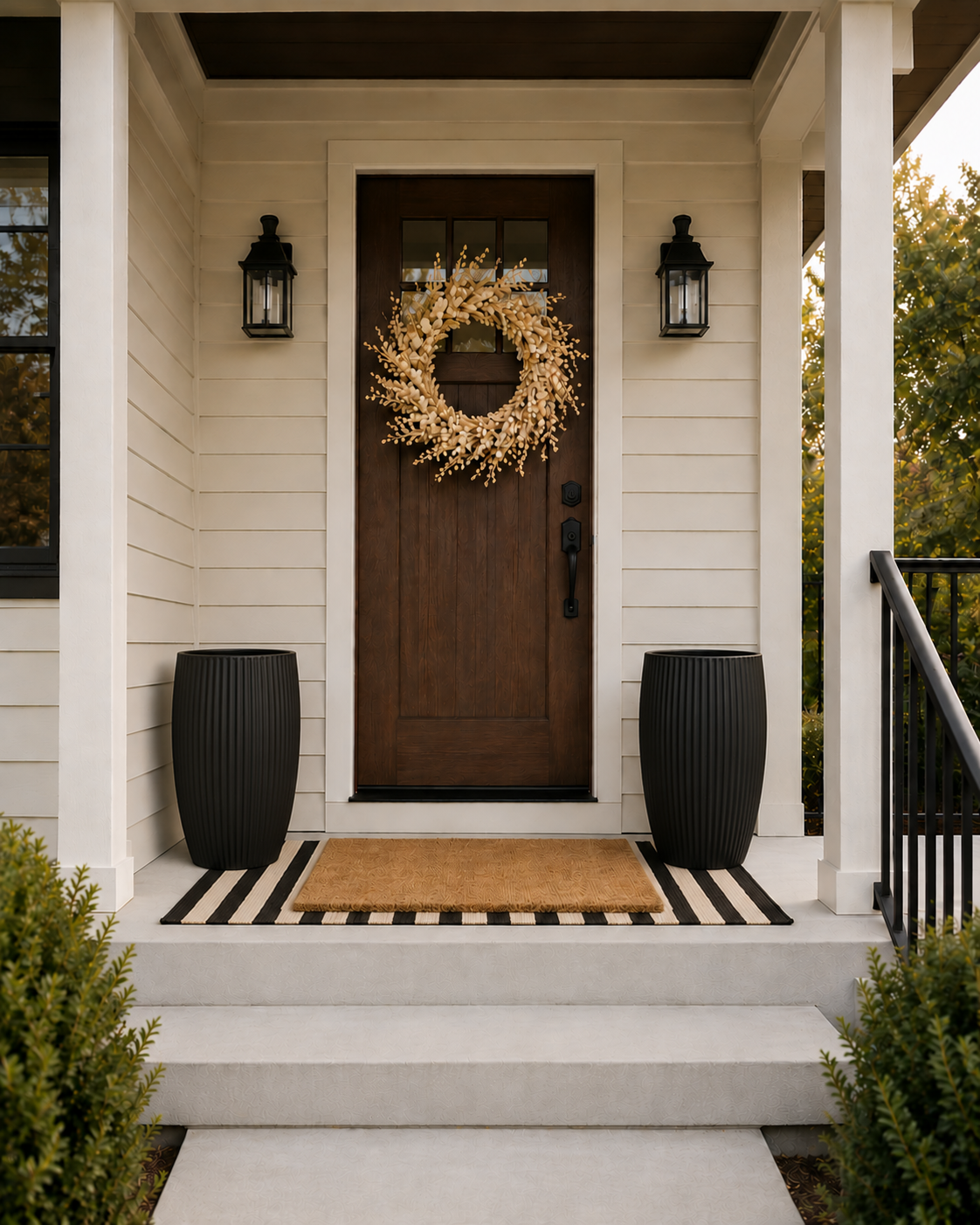
We layered a black-and-light beige striped outdoor rug beneath a simple natural coir doormat. That's it.
Neither one has a pumpkin on it.
Neither says Hello Fall.
Neither needs to be packed into a storage bin on November 1. And that's precisely why they work.
The larger rug introduces pattern and helps visually define the entrance, while the smaller coir mat adds another natural texture and keeps the layered look practical.
Notice how the colors also begin repeating what's already around them:
The black stripe relates to the porch sconces, railing and eventually our planters.
The natural fibers relate to the warm wood door and champagne wreath. Nothing matches exactly. It simply belongs together.
Repeat colors and materials—not matching sets.
That's how a space starts to feel collected rather than decorated from a single aisle.
3. Add Structure With Year-Round Planters
Now we're getting to the Potted portion of today's proceedings. 🌿
We placed two tall matte-black fluted planters on either side of the doorway.
These give the entrance visual weight and structure, and the black finish repeats several elements already present around the porch.
But there's a strategic reason we chose relatively simple, non-seasonal containers:
Let the planter stay. Change what goes inside it.
A great outdoor planter doesn't need to be replaced every season. Fill it with spring flowers in April, summer foliage in June, rich fall plantings in September and evergreen branches during the winter.
One container. Four completely different moods.
That's a much more versatile foundation than buying another piece of explicitly seasonal decor.
4. Let the Plants Do Some of the Fall Decorating
This might be our favorite layer.
Because here's the thing: Plants are decor.
And before filling the porch with objects that represent fall, consider using actual seasonal color and texture from nature.
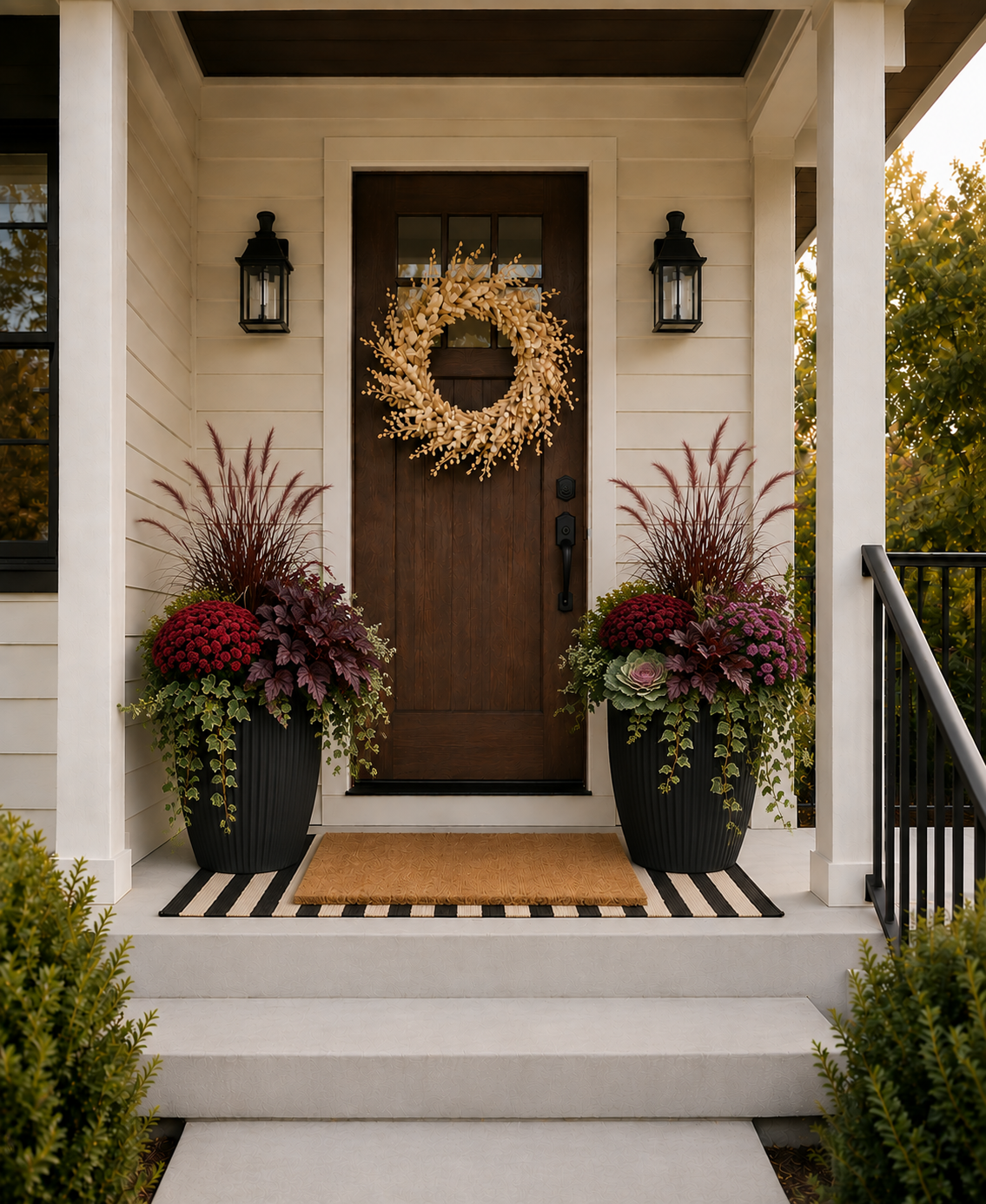
For our planters, we used the classic container-gardening formula:
Thriller + Filler + Spiller
It's easy to remember, easy to recreate and creates a much more dimensional planter than dropping one enormous mum into a pot and calling it a day.
🌾 THE THRILLER: Purple Fountain Grass
Your thriller provides the vertical interest. We chose purple fountain grass for its tall, wispy shape, movement and gorgeous burgundy-purple tones.
It immediately gives the planters drama without making them feel stiff.
Monrovia — Purple Fountain Grass
🍷 THE FILLER: Burgundy & Plum Foliage
Next comes fullness. We layered in burgundy Heuchera (coral bells) along with restrained burgundy flowers and ornamental foliage.
The important lesson here?
Fall color doesn't have to come from flowers.
Deep burgundy, purple, bronze and plum foliage can create an autumnal palette even when very little is blooming.
Proven Winners — Autumn Splendor Container Garden
🌿 THE SPILLER: Trailing Green Ivy
Finally, we added green ivy around the edges and allowed it to cascade naturally over the planters.
That trailing movement softens the tall containers and connects all those deeper colors back to the surrounding greenery.
Proven Winners — Gale Winds Container Recipe
And notice that our two planters aren't perfectly identical. They use the same visual vocabulary and the same overall palette, but the plants fall a little differently in each! That's intentional.
Sisters, not twins.
Shop for the weather, not just the calendar.
Your ideal fall container plants will depend on where you live, how much sun your porch receives and your local temperatures. Use our combination as inspiration rather than a rigid shopping list, and visit a local nursery or garden center for plants suited to your climate!
For more ideas, we also love these resources:
Fall Potted Plants: Container Gardening in Fall
And to find your gardening zone: The Hardiness Zone Search Map
5. Add Warmth With Light—and Another Texture
Who DOESN’T love warm, fall lighting?
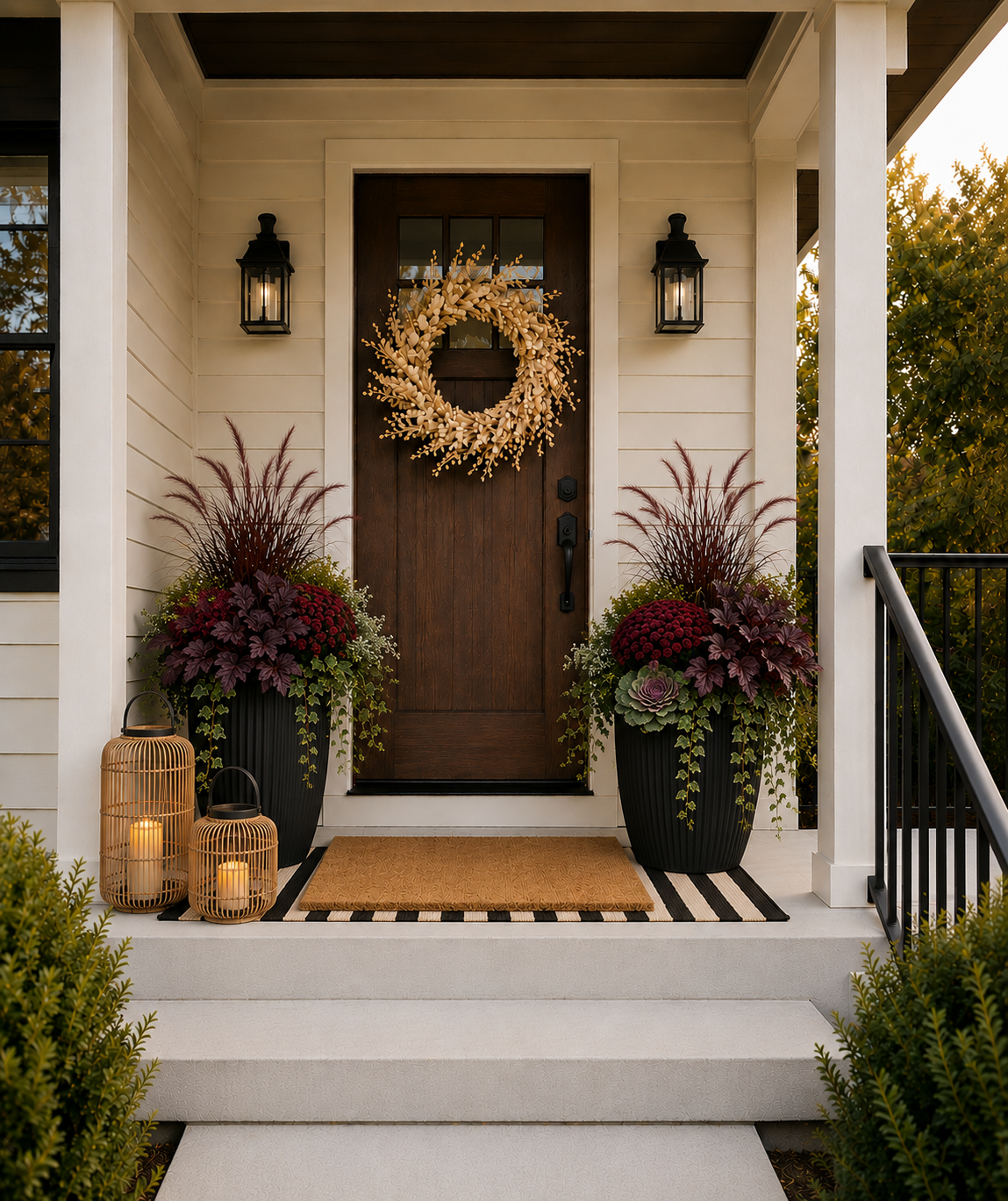
Next, we added a pair of rattan lanterns with battery-operated candles.
Originally, you might assume black metal lanterns are the obvious choice here. But look at how much black we've already established:
Black planters.
Black sconces.
Black railing.
Black stripes.
Adding more isn't automatically better. Too much “matchy matchy” feels very expected boring to the eye. Instead, the light woven rattan gives the eye a break and creates contrast against the matte-black planter behind it. And while the material is different, it isn't random.
The rattan echoes the natural coir doormat, warm wood door and pale champagne wreath.
That's an important distinction:
Repeat materials, but don't repeat objects.
You don't need another coir piece because you already have a coir mat. Instead, another warm woven texture creates a relationship between different parts of the porch.
We grouped both lanterns together on one side rather than placing one beside each planter.
Why?
Because we already have plenty of symmetry.
The door, sconces and two large planters establish balance. Grouping the lanterns on one side begins to loosen that symmetry and makes the porch feel a little more natural and collected.
And battery-operated candles give us the cozy glow without requiring anyone to perform a nightly porch-candle-lighting ceremony.
Practical note: Follow the manufacturer's directions regarding outdoor exposure. If decorative lanterns aren't specifically rated for full weather exposure, use them on a protected or covered porch.
6. Now You May Add the Pumpkins
They've been waiting patiently.
It's time.
🎃
But here's where fall porches tend to go off the rails.
You add a pumpkin.
It looks nice.
So you add three more.
Then gourds.
Then hay bales.
Then cornstalks.
And suddenly the porch appears to be operating a small seasonal farm stand.
We support pumpkins. We simply don't believe every pumpkin at the farm needs to come home with you.
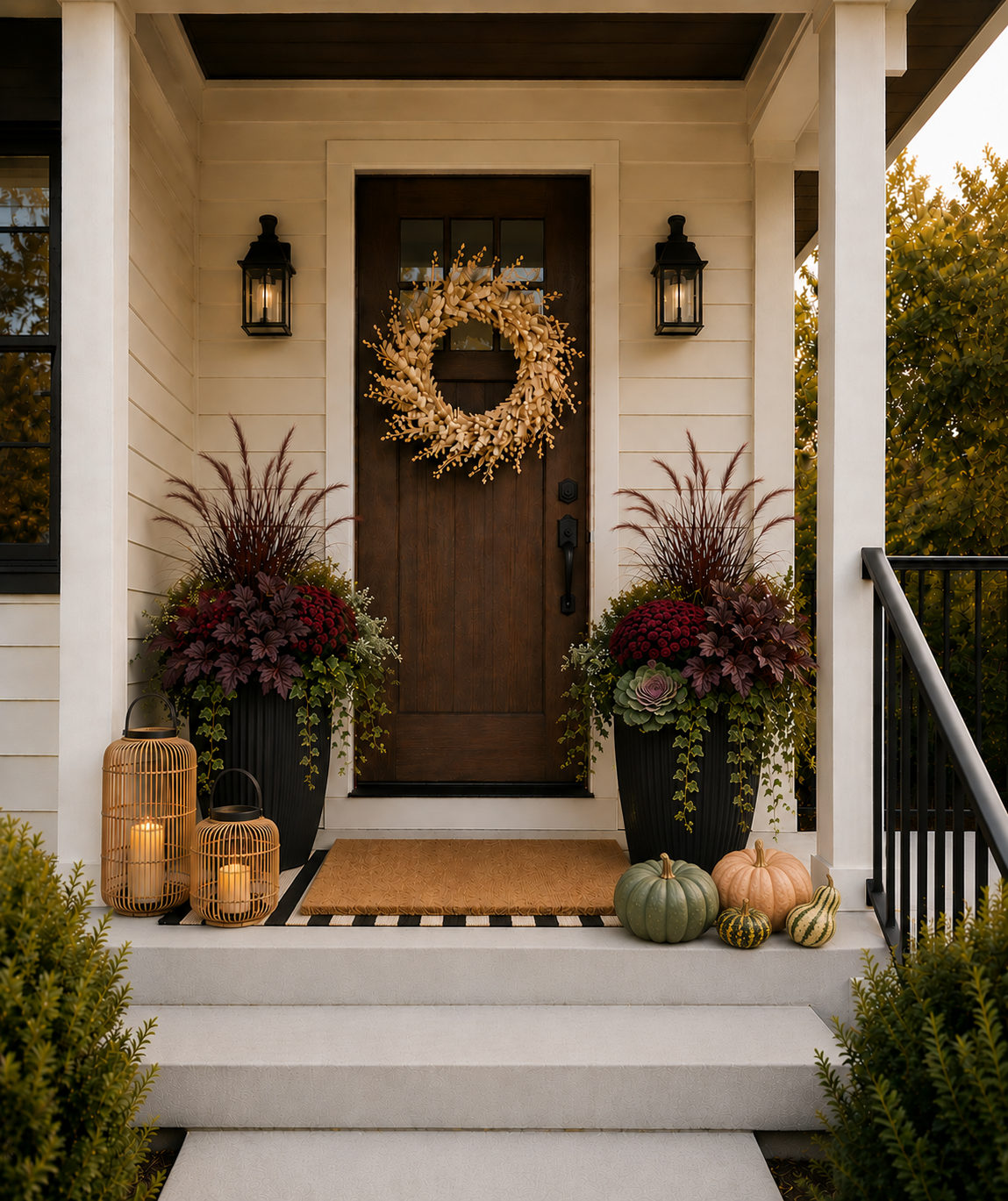
For our finished porch, we used just two pumpkins and two gourds.
And rather than defaulting to bright orange, we chose colors that repeat the palette we've already established:
muted sage green
dusty terracotta/peach
cream
deep green
No affiliate links required here.
Go to your local farm stand, pumpkin patch, grocery store or garden center and see what catches your eye.
Look for different sizes, shapes and subtle variations in color, then arrange a small group loosely rather than lining everything up.
Repeat Your Palette—Don't Introduce a New One!
This is what makes those few pumpkins feel integrated rather than added as an afterthought.
The sage echoes our foliage.
The muted terracotta adds warmth beside the wood and natural fibers.
The cream relates to the siding and wreath.
The deeper green relates to the ivy and surrounding landscape.
The pumpkins aren't creating an entirely new color scheme.
They're repeating the one that's already there.
7. Know When to Stop
This is an actual step in the process.
A real one.
Once you've layered in your focal point, pattern, planters, seasonal foliage, warm light and a few natural accents... Step back.
Look at the whole porch.
And resist the urge to ask:
“What else can I put there?”
Instead, ask:
“Does it need anything else?”
Those are two very different questions.
An empty spot isn't necessarily a problem waiting to be solved. We could have added a bench to this porch. A blanket. A basket. More pumpkins. A sign. Another lantern. More flowers.
But none of those things would have made the finished space better.
So we stopped.
Good styling isn't just knowing what to add. It's knowing when you're finished.
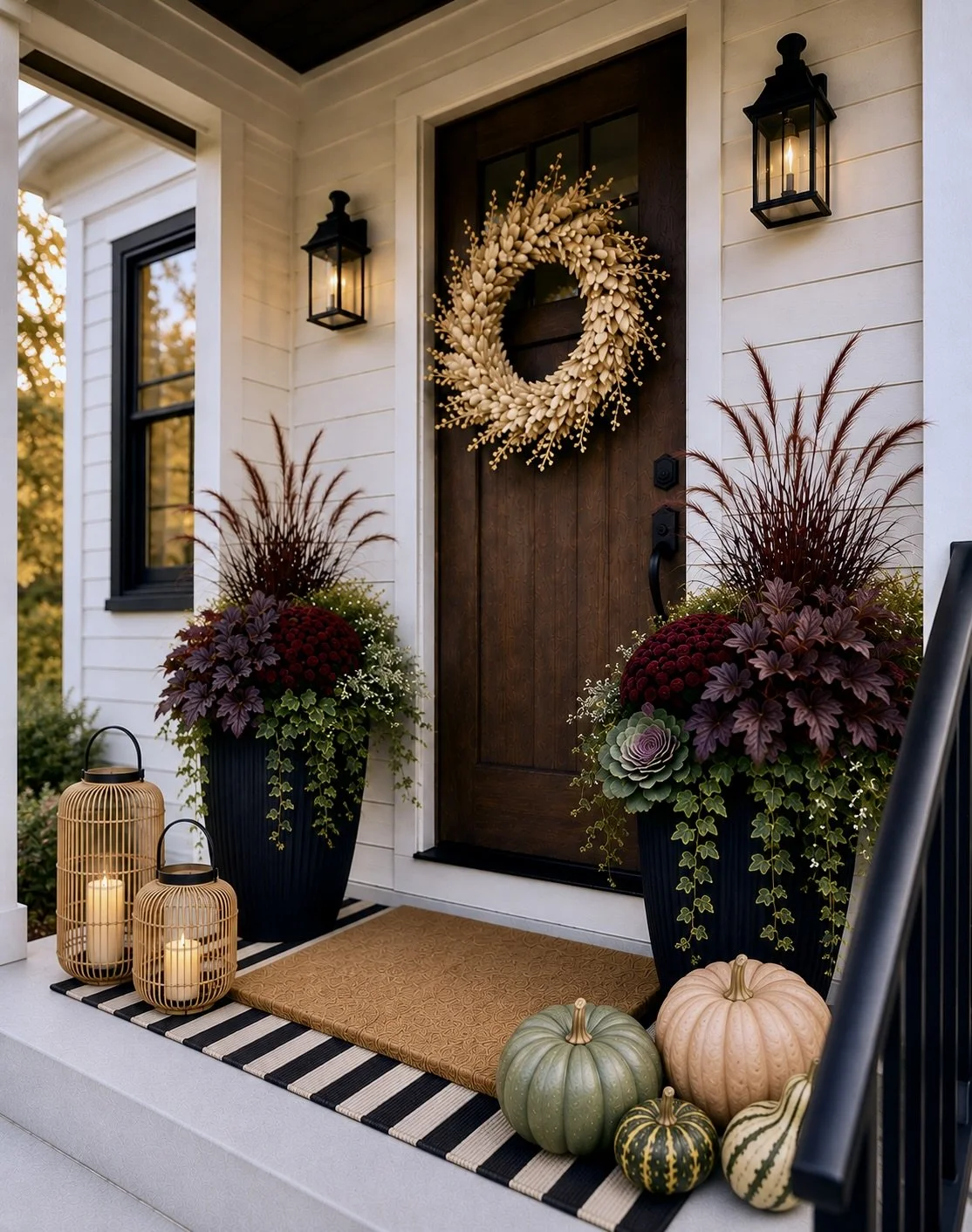
🍂 The Finished Look
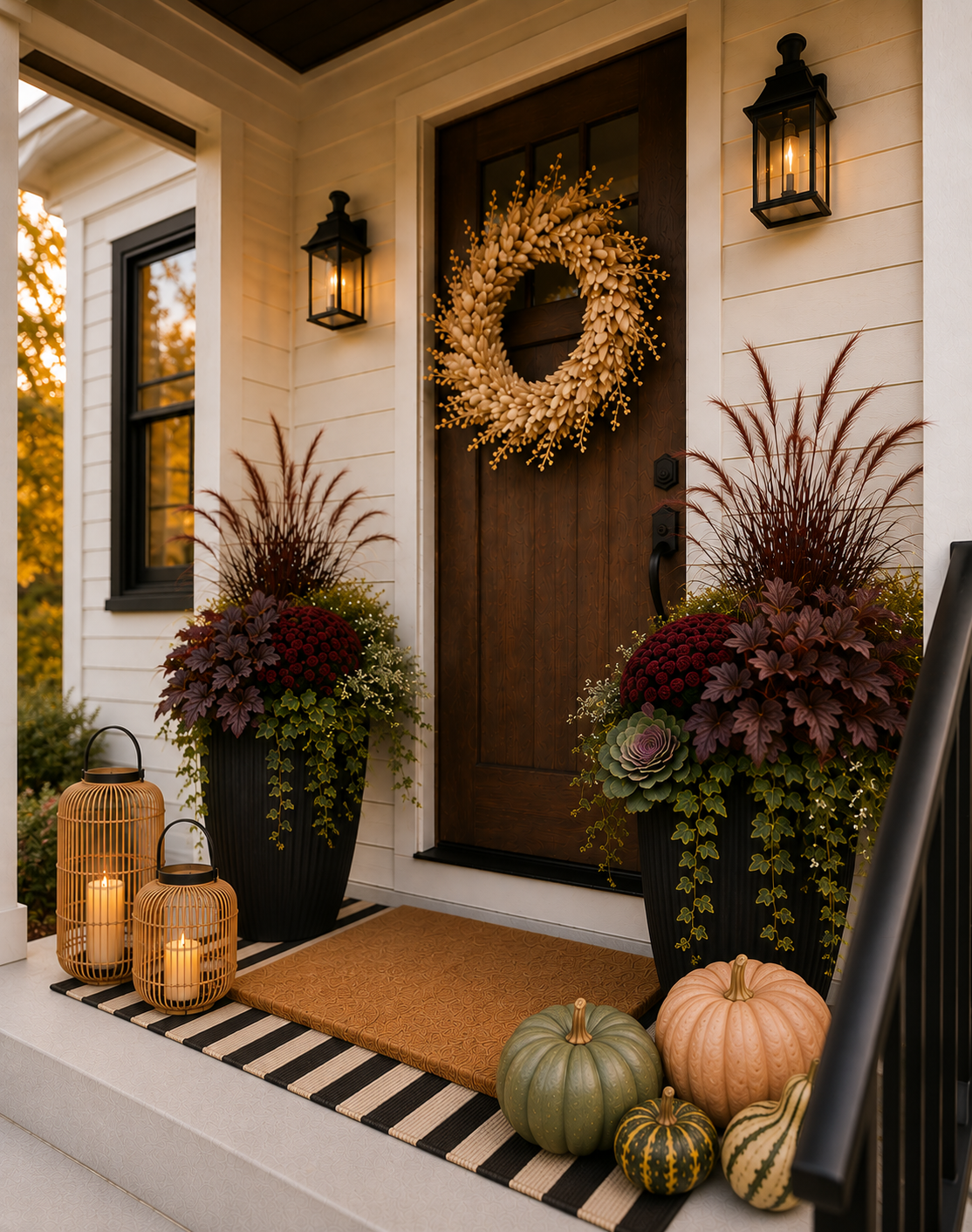
Look closely at the finished porch and something interesting happens.
Very little of what you're seeing is actually fall-specific decor.
The striped rug?
Year-round.
Coir mat?
Year-round.
Black planters?
Year-round.
Rattan lanterns?
Year-round.
The seasonal transformation comes primarily from:
the wreath
the plants
the pumpkins and gourds
the warmer overall palette
And yet the porch unmistakably feels like fall.
That's the goal.
The best fall decorating doesn't announce the season. It lets you feel it.
🌿 Potted + Styled Signature Takeaway
You don't need to reinvent your front porch every time the season changes.
Start with versatile pieces you genuinely like. Layer in color and texture from nature. Repeat the materials and colors already present around your home. Add a few seasonal elements with intention.
And then, perhaps most importantly, edit.
Because a beautiful fall porch doesn't require a sign telling everyone it's fall.
The burgundy fountain grass, warm candlelight, woven textures and a couple of pumpkins have already broken the news.
Layer, don't theme.
Your home should still feel like your home.
Just... your home when the air gets crisp and pumpkins are finally allowed out of the lobby.
🌿 Continue Your Styling Journey
A beautifully styled entry doesn't have to stop at the front door.
→ How to Style a Warm & Welcoming Entryway Without Spending a Fortune
Carry the same ideas—layering, texture, greenery and intentional styling—into the first space your guests see when they step inside.
→ How to Style a Coffee Table That Feels Collected, Not Cluttered
Use many of the same principles to create a living-room focal point that feels layered and personal without becoming overcrowded.
→ The Best Decorative Trays for Every Room
See how one simple styling tool can bring structure to everything from your entryway to your nightstand.
