How to Use Black Decor Without Making a Room Feel Dark
Beautiful homes don’t happen by accident. 🌿
Black is one of the easiest ways to make a room feel more finished… And one of the easiest colors to get nervous about.
Add a black lamp, frame, vase, or piece of furniture and suddenly there’s contrast. Shapes feel sharper. Lighter colors look brighter. Warm wood looks warmer. Even a room that felt a little flat can start to feel more intentional.
But there’s an understandable hesitation: Will adding black make my room feel dark?
It doesn’t have to.
The secret to decorating with black isn’t avoiding it or limiting yourself to one tiny black accessory. It’s paying attention to what you put around it.
Warm wood. Creamy whites. Natural fibers. Texture. Color. Good lighting.
Those are the elements that allow black to add depth without weighing down the room.
And there isn't one correct amount to use!
Sometimes black is the backdrop. Sometimes it’s the furniture. Sometimes it’s just the punctuation.
Here are seven ways to use black decor while keeping your home warm, layered, and inviting.
1. Start Small With Black
You don't need a black wall, or even a large piece of black furniture, to make an impact.
Sometimes a few small, repeated black accents are enough to give a room the contrast it's missing.
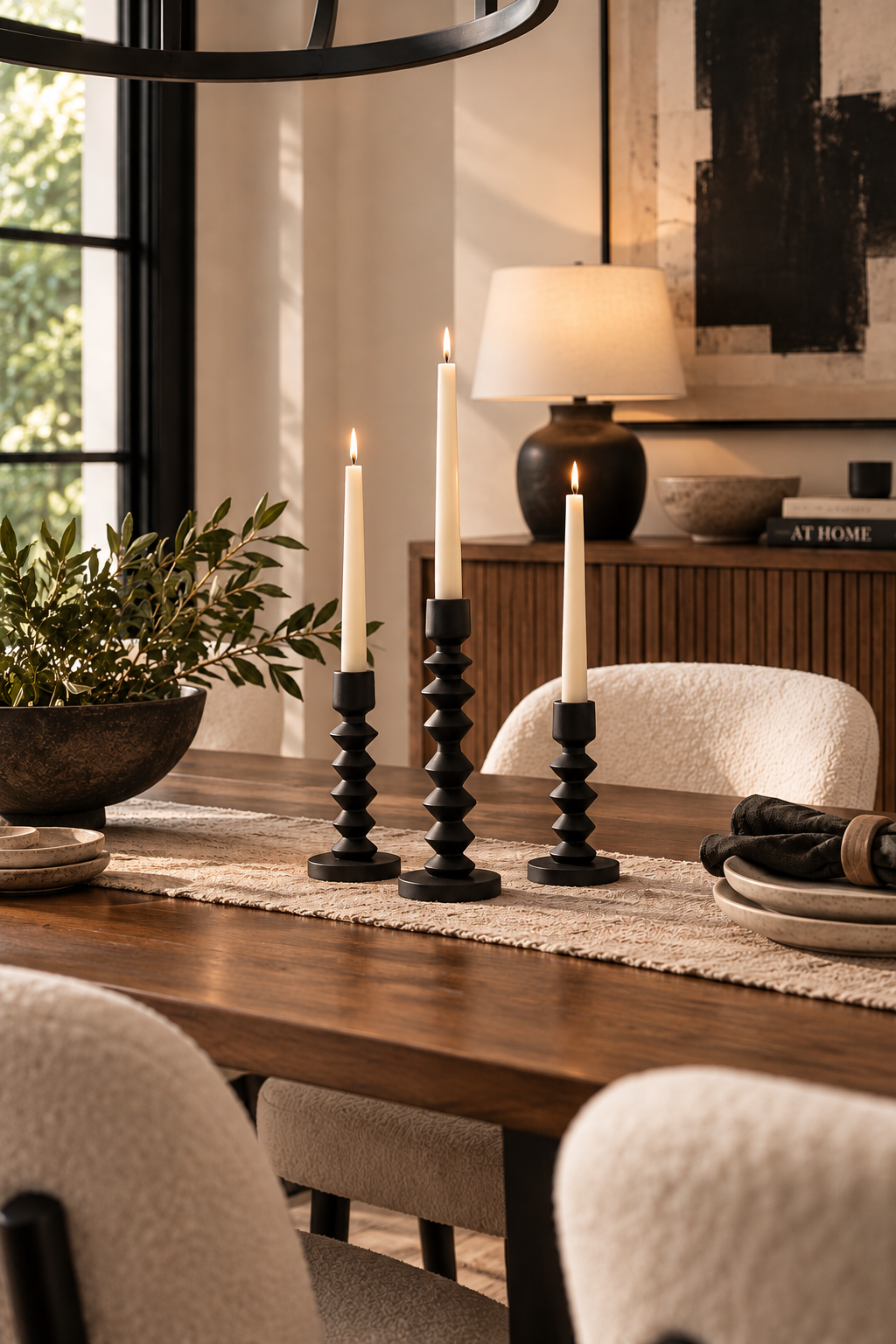
In a light dining room, a set of black taper candleholders creates a visual anchor against warm wood and cream upholstery. Because the black is repeated at different heights, your eye reads it as intentional rather than as one random dark object.
This is an especially easy trick if your room feels pleasant but a little too soft. Try repeating black two or three times through pieces such as candleholders, a lamp base, hardware, a bowl, or the edge of a frame. This particular set of tapered candleholders can also be the perfect finishing touch for a fireplace mantle, an entryway table, a console table behind a sofa, and more!
The principle:
Black doesn't have to dominate a room to define it.
Shop the Look: Black Sculptural Candleholders
2. Use Black to Create Definition
One of black's greatest decorating superpowers is its ability to create an outline.
That's why slim black picture frames work so well, even in otherwise light rooms.
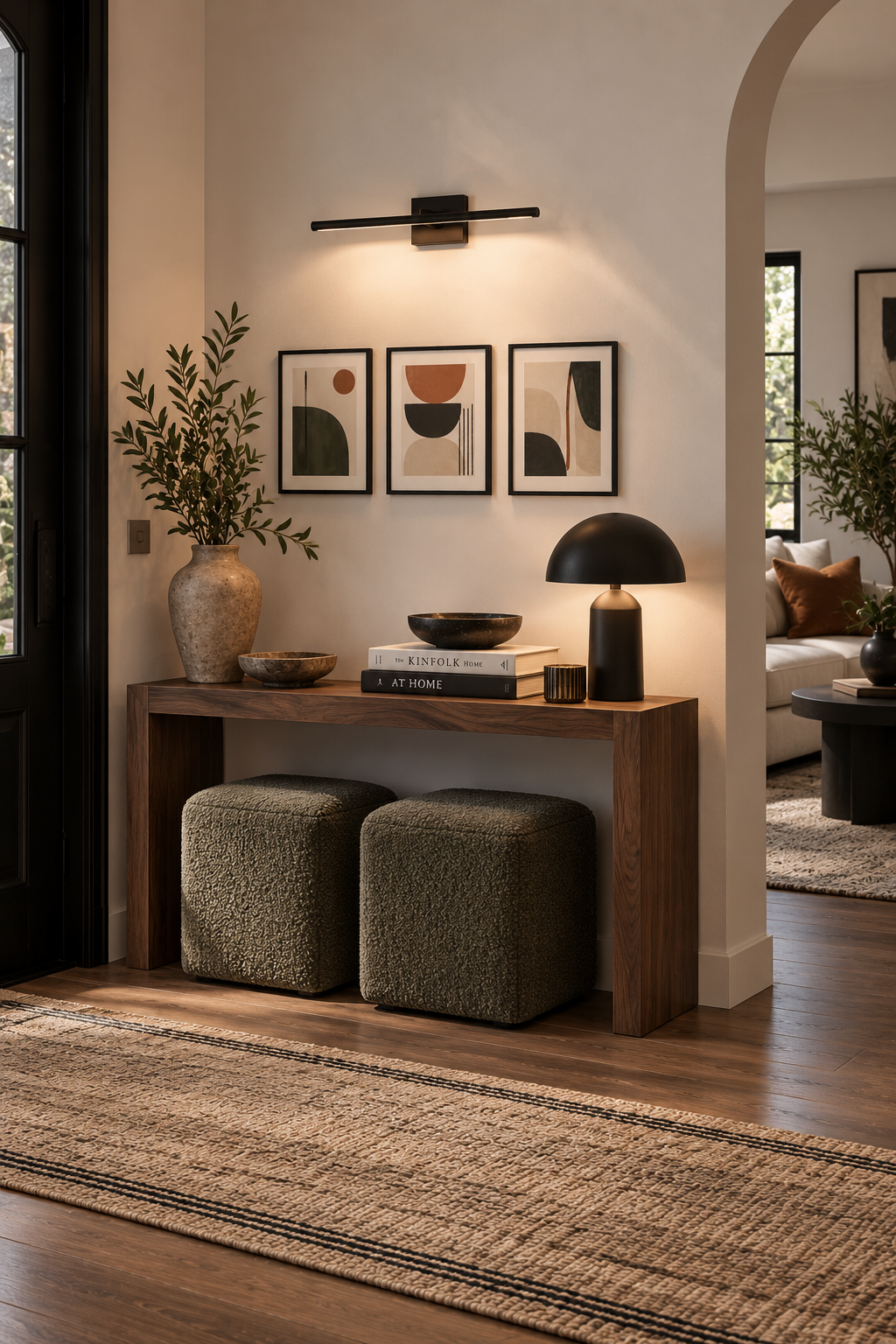
Against a warm white wall, a narrow black frame creates a crisp boundary around artwork without introducing a large amount of dark color.
And notice what happens when the artwork itself isn't black and white.
Cream, olive, rust, ochre, burgundy, and other warmer shades get to remain the focus while the black simply gives them structure.
This same idea works beyond artwork. Black window frames, cabinet hardware, curtain rods, and thin furniture legs can all act like visual outlines throughout a room.
The principle:
Use black to draw the lines—not necessarily fill the space between them.
Shop the Look: Slim Black Aluminum Picture Frames
3. Bring In Warm Wood
If a room with black decor starts feeling stark, look at the other materials before deciding you've used too much black.
You may simply need warmth.
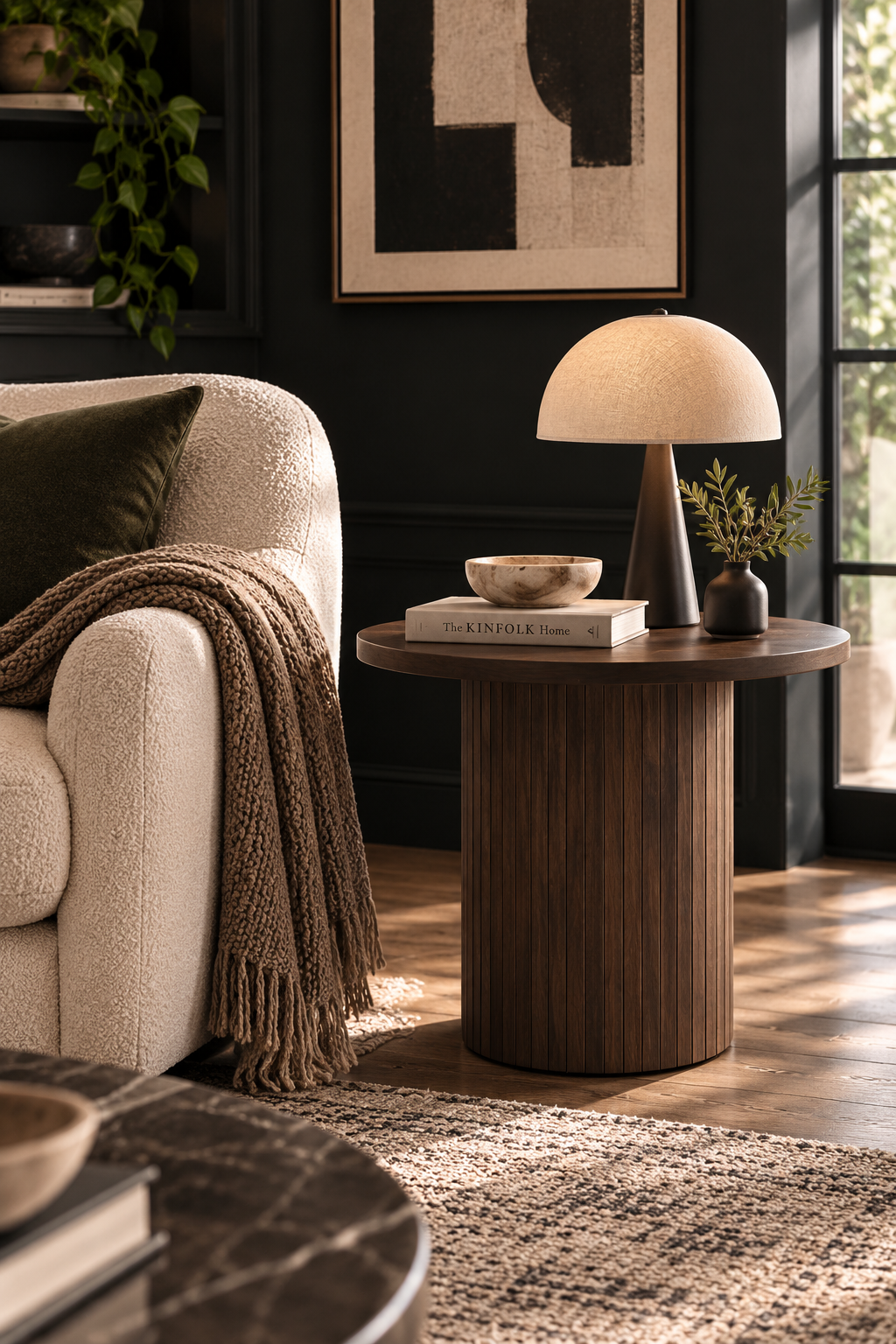
Walnut, oak, teak, and other warm woods are particularly good partners for black because they soften its cool visual weight without eliminating the contrast that makes it interesting.
The combination also works in almost any proportion.
A walnut side table can warm up a room with black built-ins. A wood console can soften a black accent wall. Even something as small as a wooden bowl can interrupt an otherwise hard combination of black, white, glass, and metal.
Our fluted walnut side table does a little extra work here: the wood adds warmth while the fluting introduces another layer of texture and shadow.
The principle:
When black feels cold, don't necessarily remove the black. Add warmth beside it.
Shop the Look: Fluted Walnut Side Table
4. Soften Black With Natural Materials
Black becomes much easier to live with when you pair its clean lines with materials that aren't quite so perfect.
Think rattan. Cane. Linen. Woven fibers. Raw wood. Stone.
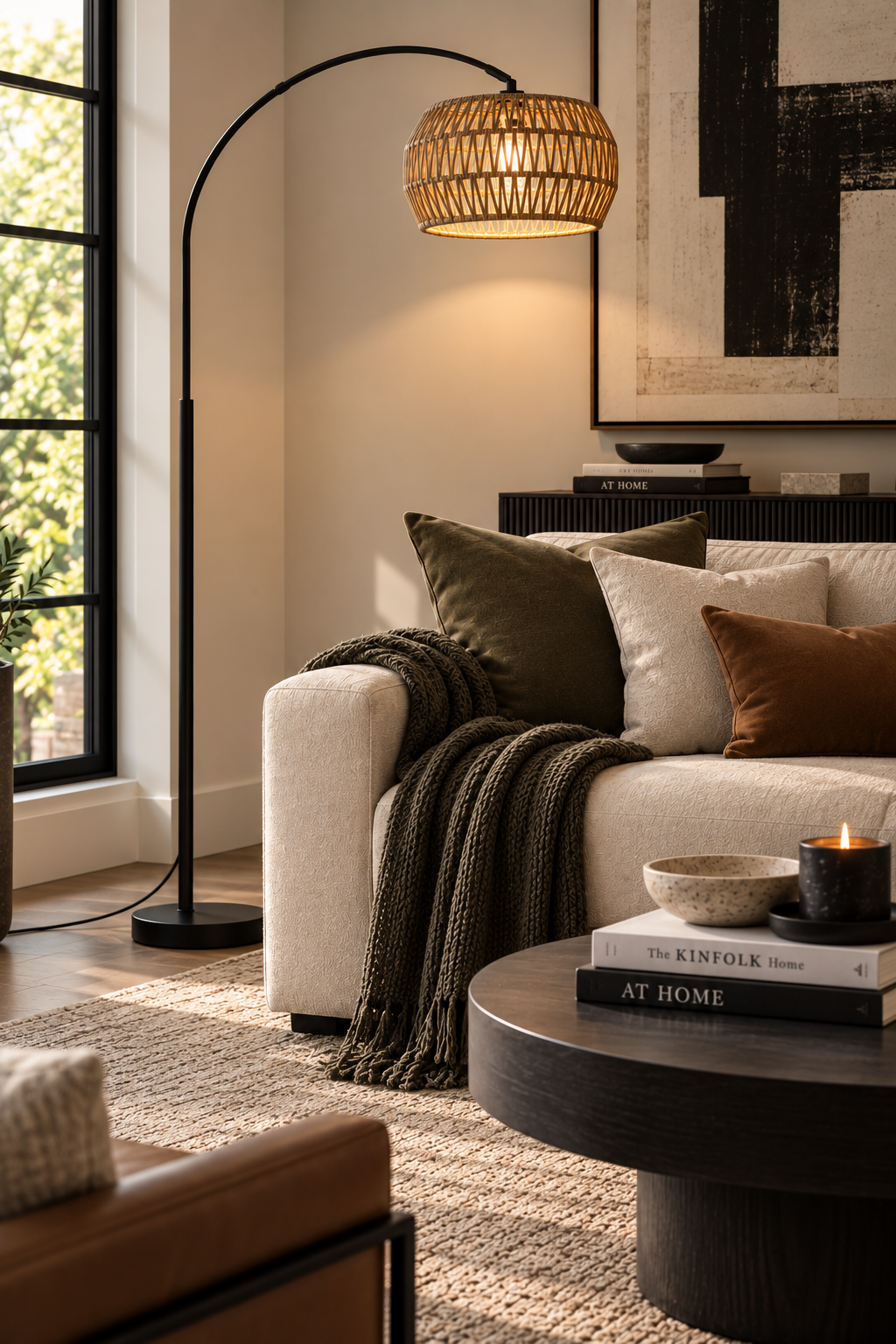
This floor lamp is a perfect example.
The tall black metal frame gives the room definition, but the woven rattan shade keeps the lamp from feeling severe. Turn it on, and warm light filtering through the natural material softens it even further.
That's a useful formula to remember:
Black + natural material + warm light.
You still get all the graphic contrast of black, but it feels relaxed rather than harsh.
The principle:
The material you pair with black can completely change how black feels.
Shop the Look: Black Arched Floor Lamp With Rattan Shade
5. Break Up Large Black Surfaces With Soft Texture
What if the black element isn't small? Maybe you have a black dining table, dark sofa, black cabinetry, or another substantial piece you love!
You don't have to hide it.
But if it’s feeling too heavy, interrupt the surface.
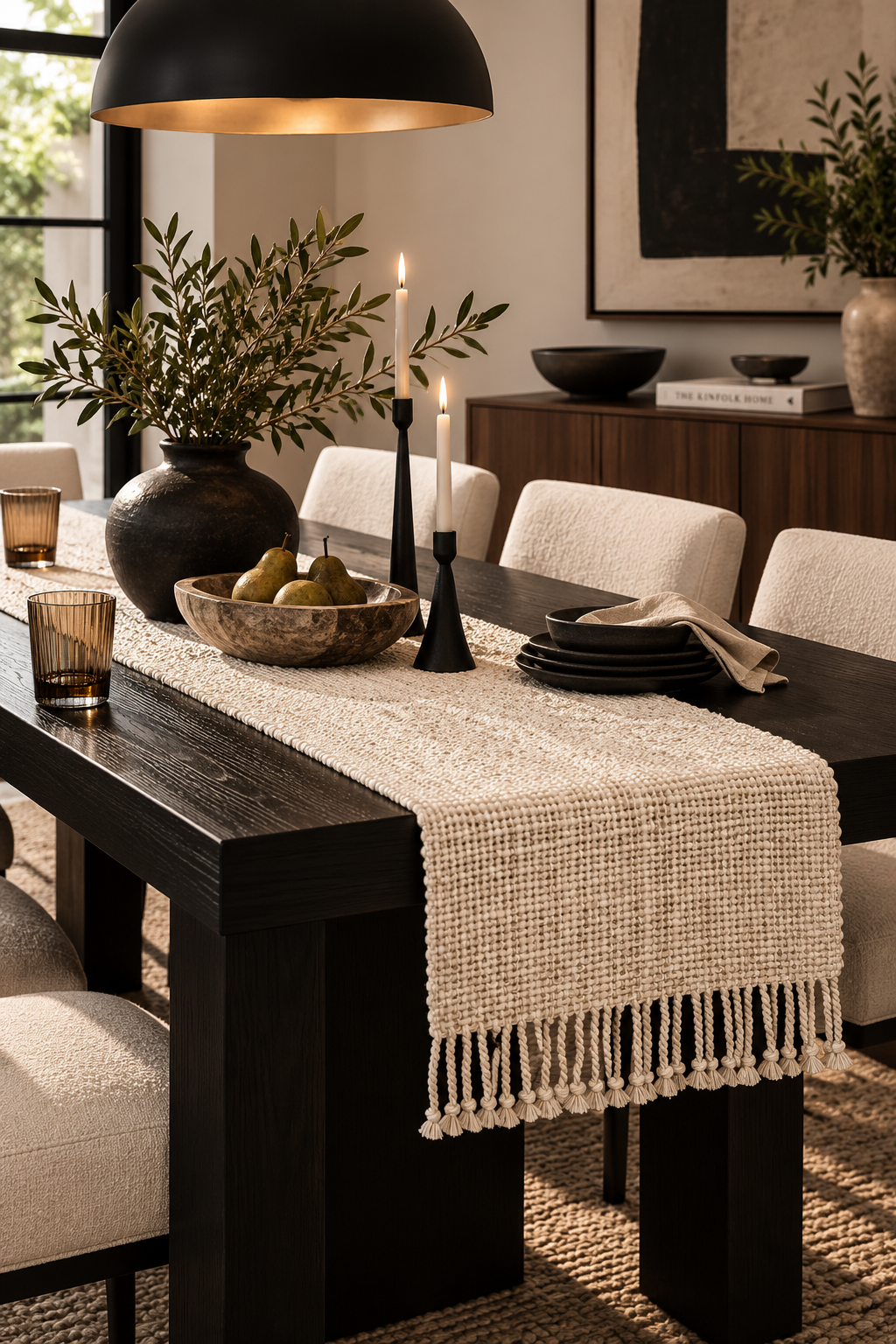
A cream woven table runner does exactly that on a black wood dining table.
The contrast immediately lightens the composition, but the texture is just as important as the color. The nubby weave and fringe introduce softness and dimension against a smooth, substantial piece of black furniture.
You can use the same idea throughout your home!
Layer a creamy throw over a black sofa. Put a textured ivory pillow on a charcoal chair. Place a pale woven basket beside dark cabinetry.
The goal isn't to cover the black. It's to give your eye somewhere else to go.
The principle:
When a large black surface feels heavy, layer over it instead of fighting it.
Shop the Look: Textured, Cream Cotton Table Runner with Tasseled Detail
6. Let Color Share the Spotlight
One of the biggest misconceptions about decorating with black is that the rest of the room needs to stay neutral.
It doesn't.
In fact, black can make color look incredible.
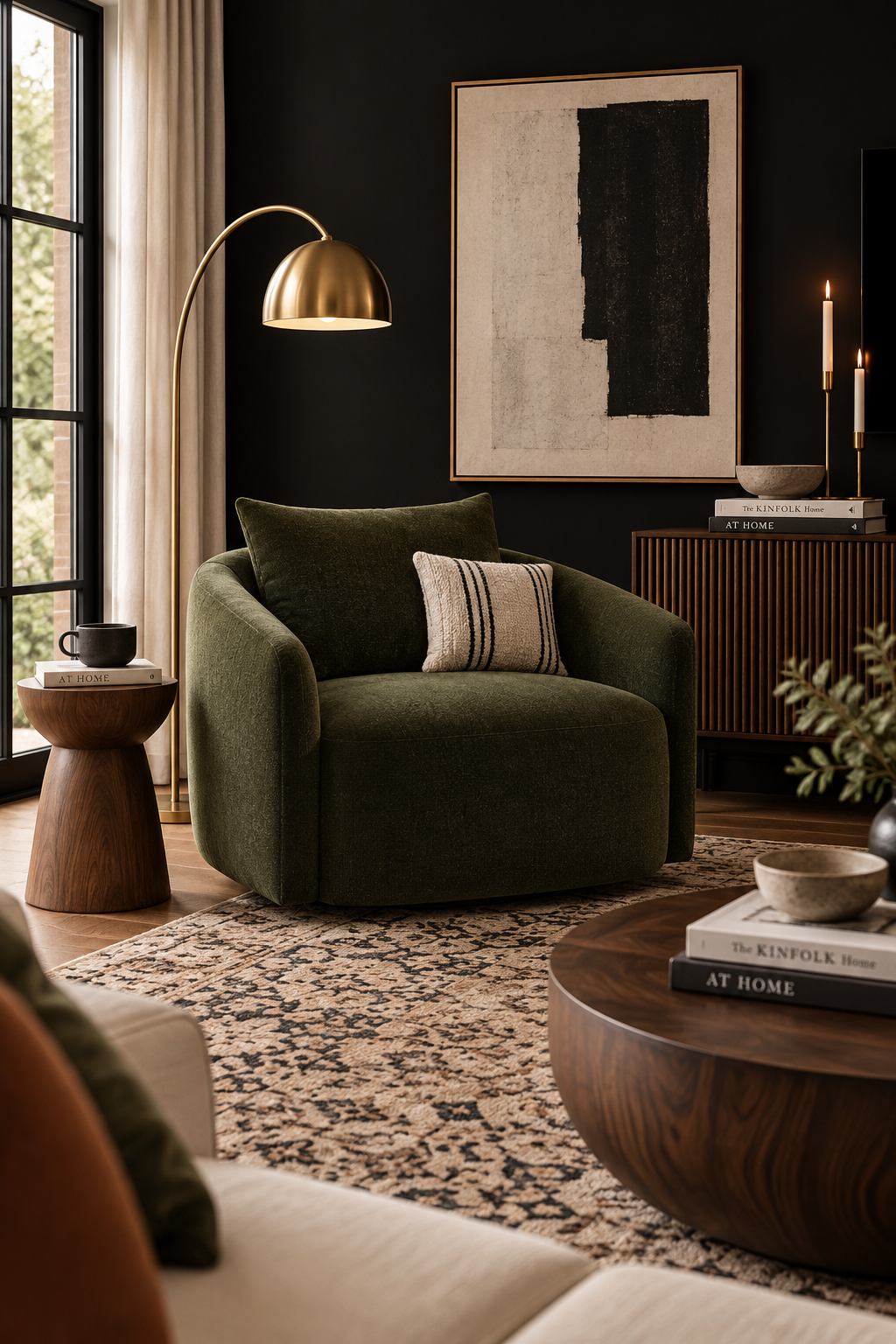
Against a black accent wall, a rich olive green chair suddenly feels deeper and more saturated. Instead of competing with the color, the black creates a backdrop for it.
This works particularly well with shades that already have some depth: forest green, olive, rust, cognac, burgundy, ochre, teal, and deep blue.
If a black wall or piece of furniture is starting to make your room feel too serious, your solution might not be less black.
It might be more color!
The principle:
Treat black as a neutral backdrop and let another color be the personality.
Shop the Look: Olive Green Upholstered, Swivel Accent Chair
7. Add Texture to a Black Accent Wall
A black accent wall can create incredible depth in a room—but a large uninterrupted dark surface can sometimes feel visually heavy.
This is where texture becomes your friend.
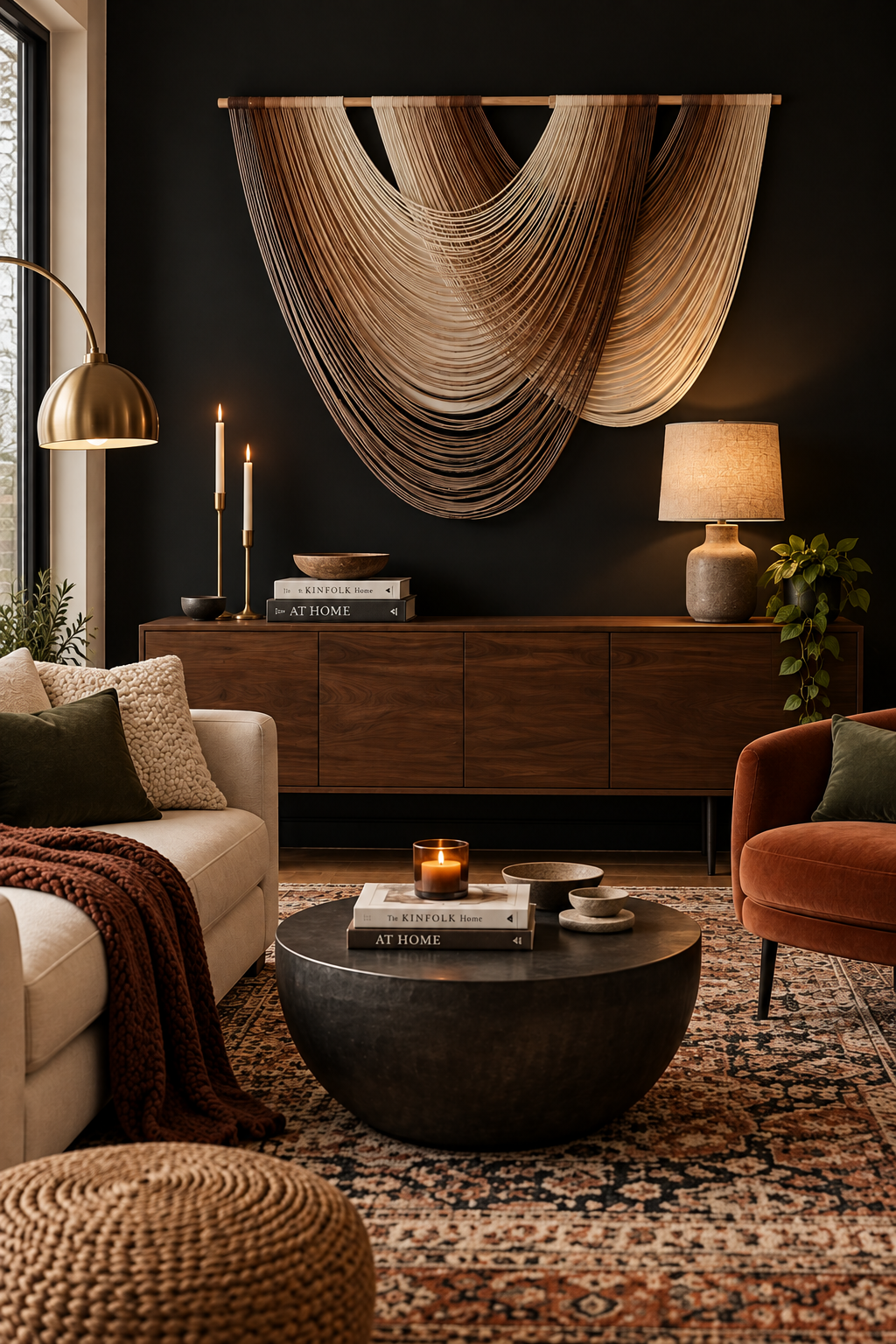
Instead of covering a dark wall with more hard-edged black-and-white decor, try introducing something tactile.
An oversized fiber wall hanging breaks up the flat surface with movement, softness, and dimension. Warm ivory and brown tones also create contrast without feeling as stark as bright white.
The result is still dramatic. It just feels warmer!
This is one reason black accent walls work best when they're treated as part of a larger material palette rather than as the room's entire design concept.
The principle:
If a dark wall feels flat or heavy, add dimension before adding more decor.
Shop the Look: Oversized Dip-Dyed Fiber Wall Art
So, How Much Black Should You Actually Use?
There isn't a magic percentage!
A room doesn't need exactly 10% black, three black objects, or one black item in every corner to feel balanced. Instead, look at what the black is doing.
Is it outlining something? Anchoring a furniture arrangement? Creating depth? Repeating a finish? Giving a pale room some contrast?
If you can identify its job, you're probably using it intentionally.
And remember that black doesn't have to appear in equal amounts throughout a room. A black accent wall is already doing a lot of visual work. In another room, you might need several smaller black elements to create the same sense of structure.
Balance the visual weight—not the number of objects.
What If Your Room Still Feels Too Dark?
Before removing every black thing in sight, check the rest of the room.
A space can feel dark because it lacks contrast around the black—not simply because black exists.
Try introducing:
warmer white or cream instead of stark white
warm wood tones
tactile fabrics and woven materials
greenery or a saturated accent color
reflective surfaces
multiple sources of warm light
lighter artwork against dark walls
You may find that the black wasn't actually the problem. It just needed better company!
A Few Black Decor Mistakes to Avoid
The first is making everything match. A black lamp doesn't require a black table, black chair, black vase, black rug, and black artwork. Repetition creates cohesion; duplication can make a room feel overly coordinated.
Another is relying exclusively on black and bright white. That combination can be beautiful, but adding warm wood, cream, stone, color, or natural texture often makes it much easier to live with.
And finally, don't forget lighting. A room filled with beautiful dark finishes can still feel gloomy if one overhead fixture is expected to do all the work. Table lamps, floor lamps, sconces, and other warm light sources help reveal the depth and texture that make dark colors so appealing in the first place.
🌿 Signature Takeaway
Black doesn't have to make a room feel darker.
Used thoughtfully, it can give a room contrast, definition, depth, and visual punctuation.
The trick isn't figuring out how little black you can get away with. It's giving black something interesting to interact with.
Pair it with warm wood.
Layer it with cream and texture.
Put natural materials beside it.
Turn on a warm lamp.
Give it some color.
Black works best when it has something to contrast with. Pair it with warmth, texture, light, and color, and black stops making a room feel darker… It starts making everything else in the room look more intentional.
Beautiful homes don't happen by accident. 🌿
🌿 Continue Your Styling Journey
If you loved this guide, keep going with:
Turn Off the Big Light: How to Layer Lighting for a Cozy Home
Because the right lighting can completely change how dark colors feel in a room.
Best Decorative Trays for Every Room
An easy way to bring contrast, texture, and function to the surfaces you already own.
How to Style a Warm & Welcoming Entryway Without Spending a Fortune
Seven simple principles for making the first space you see feel finished and intentional.
